Turning Human Motivation into a Personalization Algorithm
Overview
When I joined Tonal, user research didn’t exist. Marketing was spending millions — including a Super Bowl campaign — targeting elite athletes who looked great in ads but barely used the product. Product personas were outdated, retention was flat, and acquisition spend was rising with no clear sense of who the product truly served.
I built Tonal’s first strategic research practice and led a foundational segmentation + personalization initiative to identify our real customers and translate their motivations into data the product could act on.
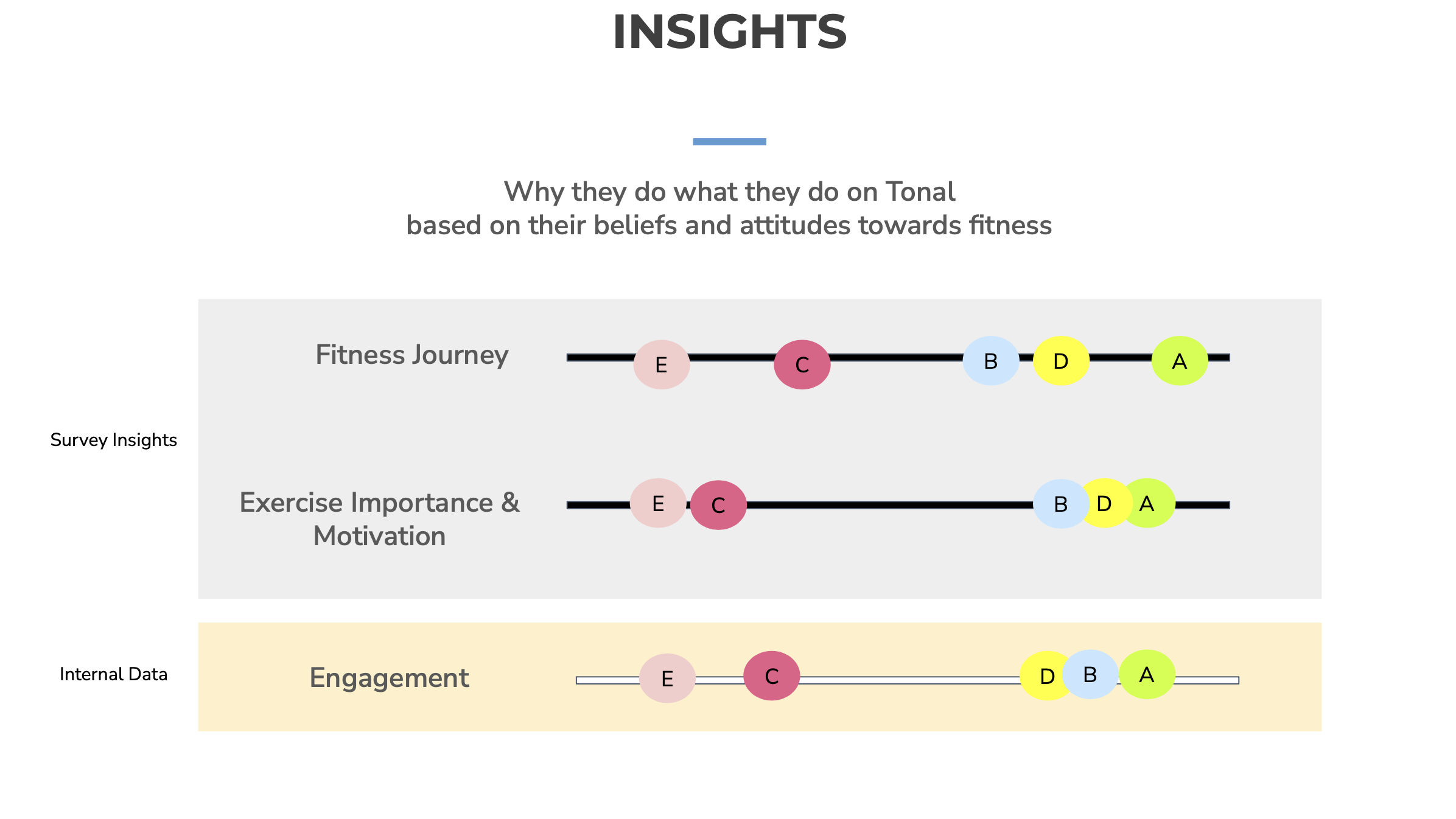
Through a 4.5 K-respondent quant + qual study, I used factor + cluster analysis to uncover five motivational segments that defined Tonal’s core audience landscape. Each represented unique attitudes toward strength training — from performance-driven optimizers to confidence-seekers and first-time lifters.
These insights informed two parallel workstreams:
A motivation-based personalization engine — tagging each user’s motivational type and feeding it into Tonal’s ML pipeline for coach + content matching.
A marketing + onboarding reframing — redefining creative, targeting, and messaging to speak to real motivations rather than aspirational ones.
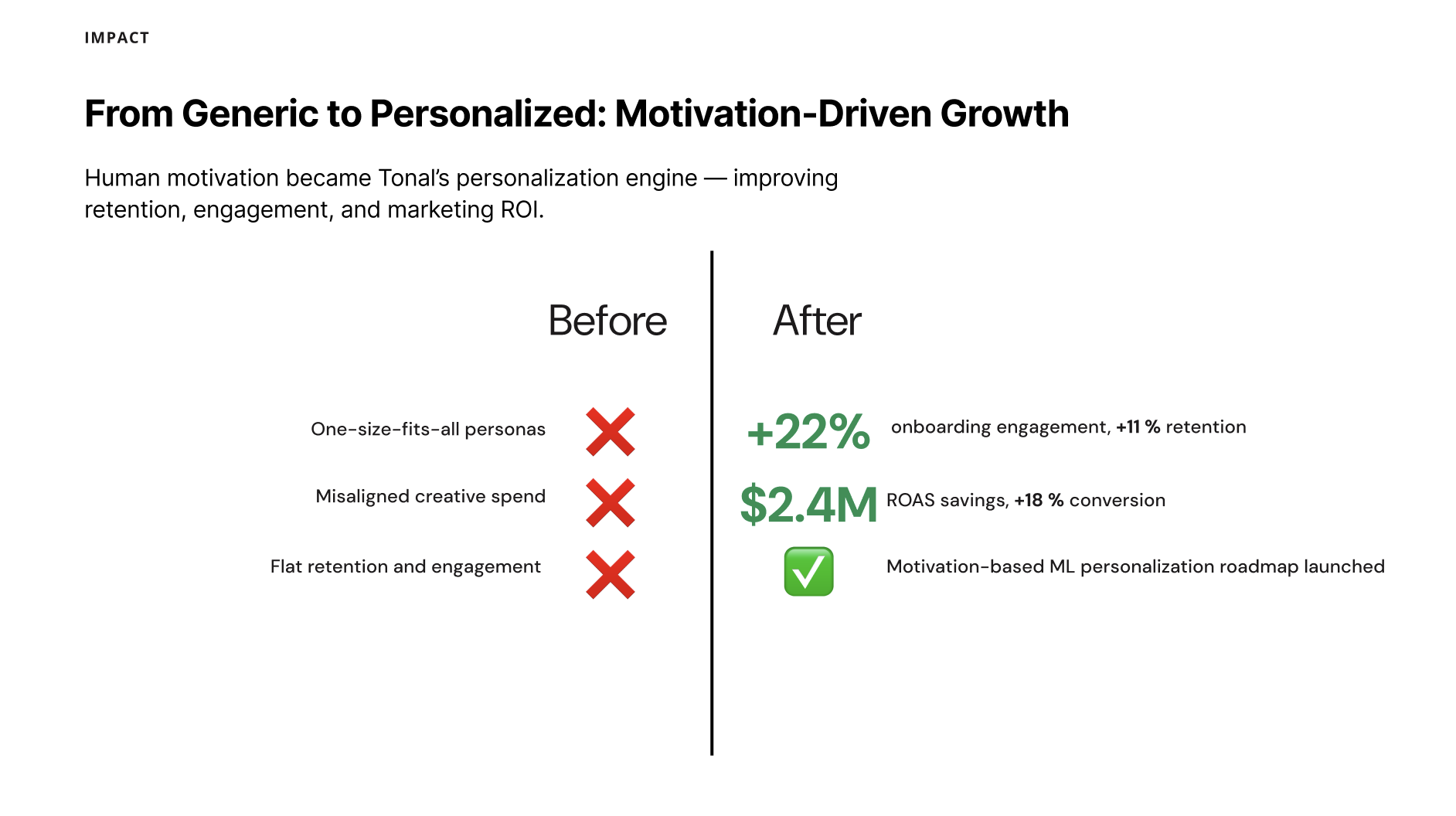
Together, these changes drove +11 % retention, +18 % conversion, +22 % onboarding engagement, and +$2.4 M in ROAS savings.
The work became the blueprint for Tonal’s personalization roadmap and marketing strategy, transforming how the company connects human motivation to machine intelligence.
Business Challenge
No research infrastructure or shared understanding of audience motivations.
Marketing segmentation was outdated and product personas weren’t actionable.
Millions spent on high-gloss campaigns targeting the wrong audience segments.
No connection between attitudinal data, product behavior, or content engagement.
Approach
Phase 1 — Discover & Define
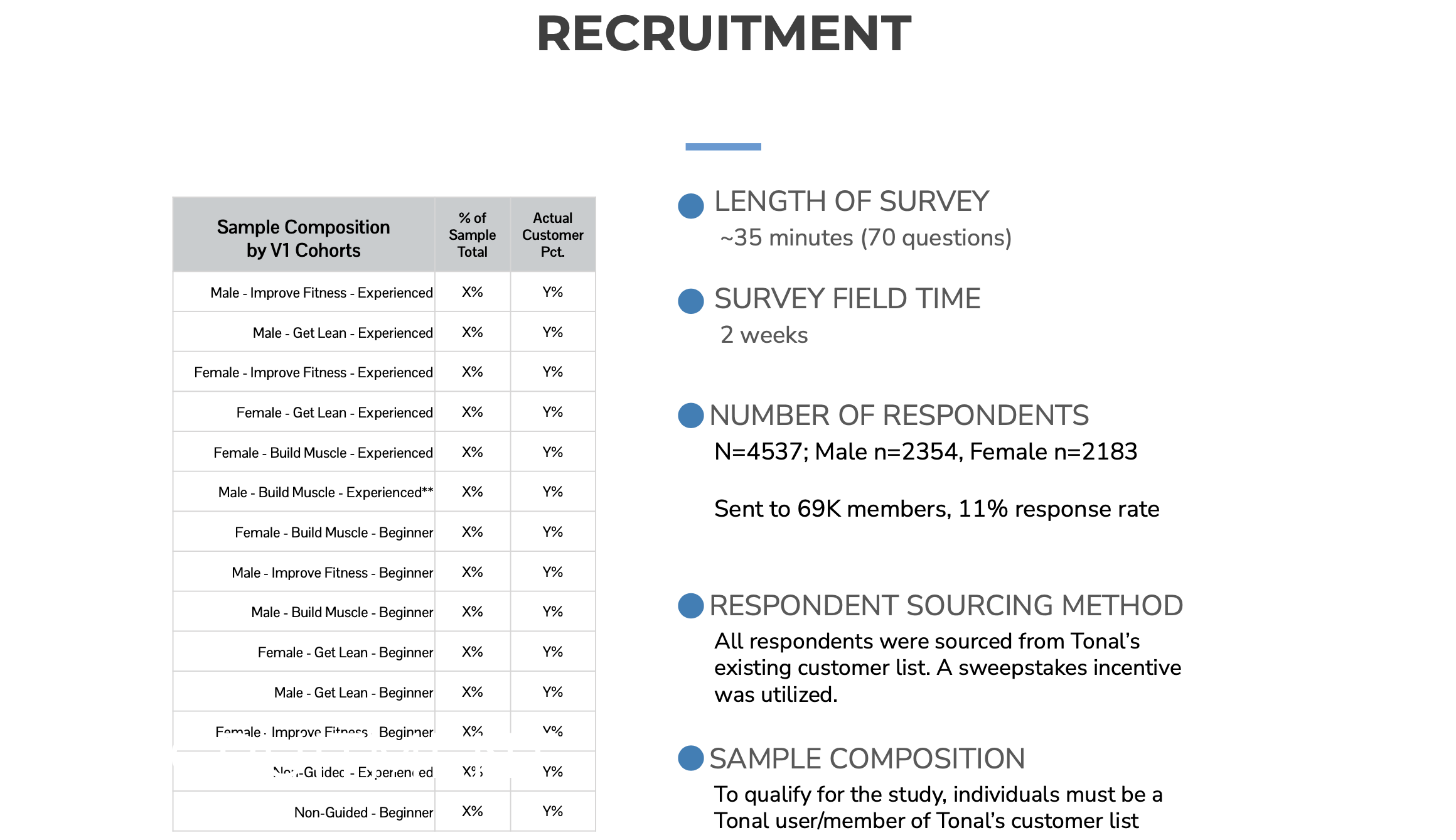
Designed a 4,500-respondent survey (35 min) covering behaviors, goals, barriers, and beliefs.
Used factor + cluster analysis to reveal five motivation-based segments.
Identified primary audience drivers: confidence, accountability, and approachability.
4.5K-member foundational study combining behavioral, attitudinal, and engagement data to uncover motivational drivers.
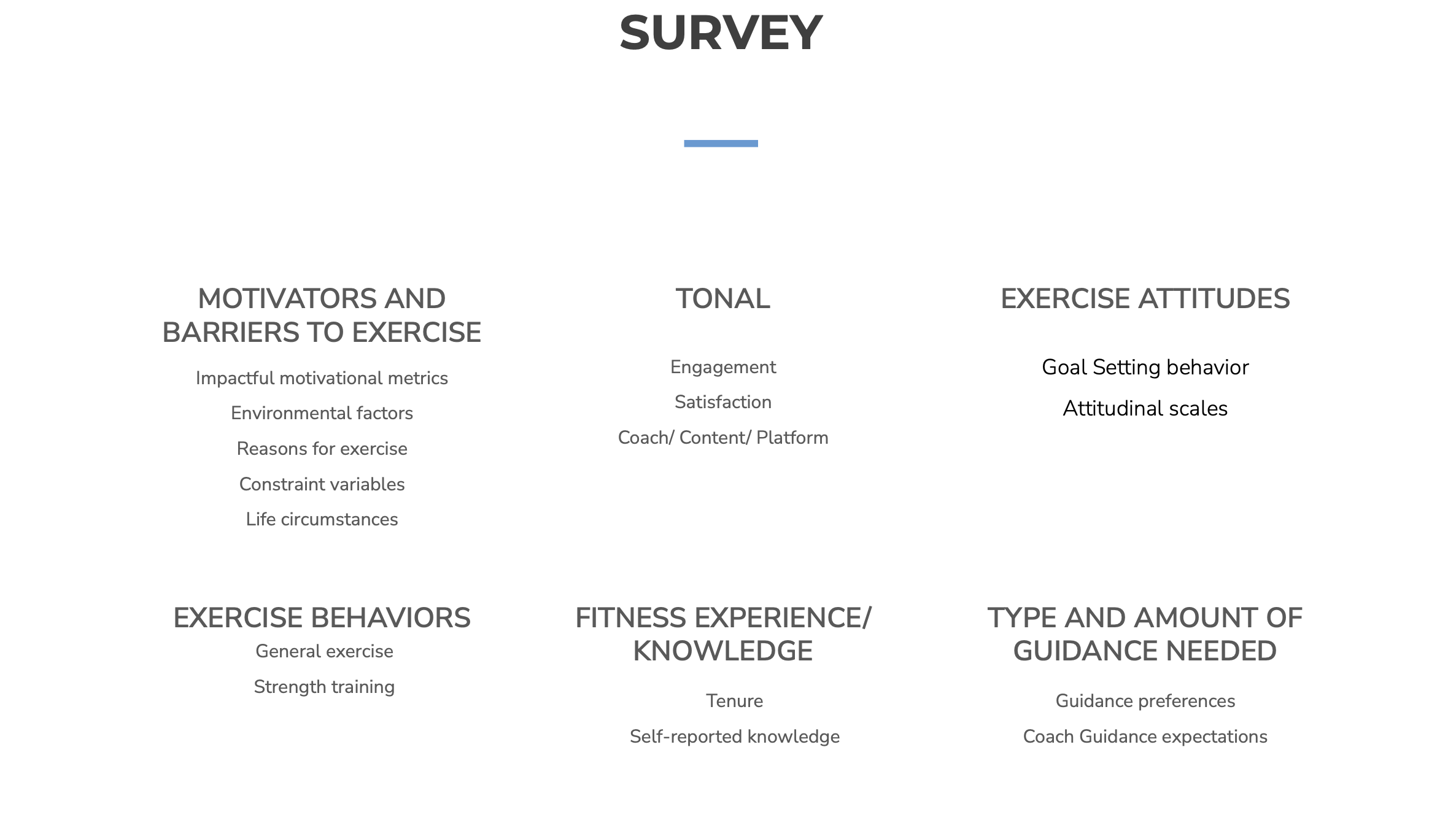
Survey instrument mapped behaviors, barriers, goals, and attitudinal scales across 70 variables.
Phase 2 — Develop & Experiment
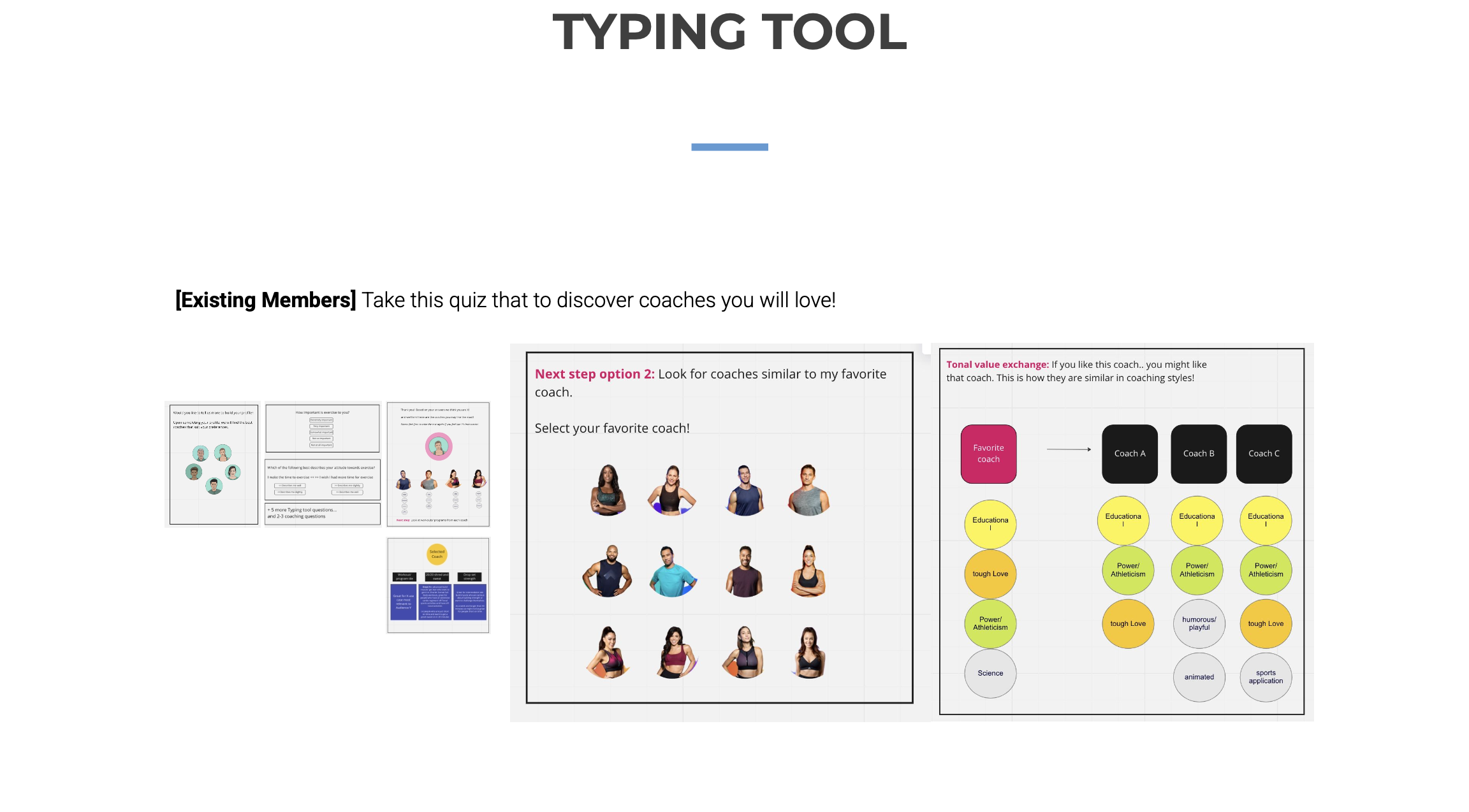
Created a typing tool that classified each user’s motivation type and integrated it into onboarding.
Partnered with Data Science to tag coaches + content with affinity/aversion variables (tone, intensity, relationality).
Ran A/B experiments testing algorithmic matching of content to motivation profiles.
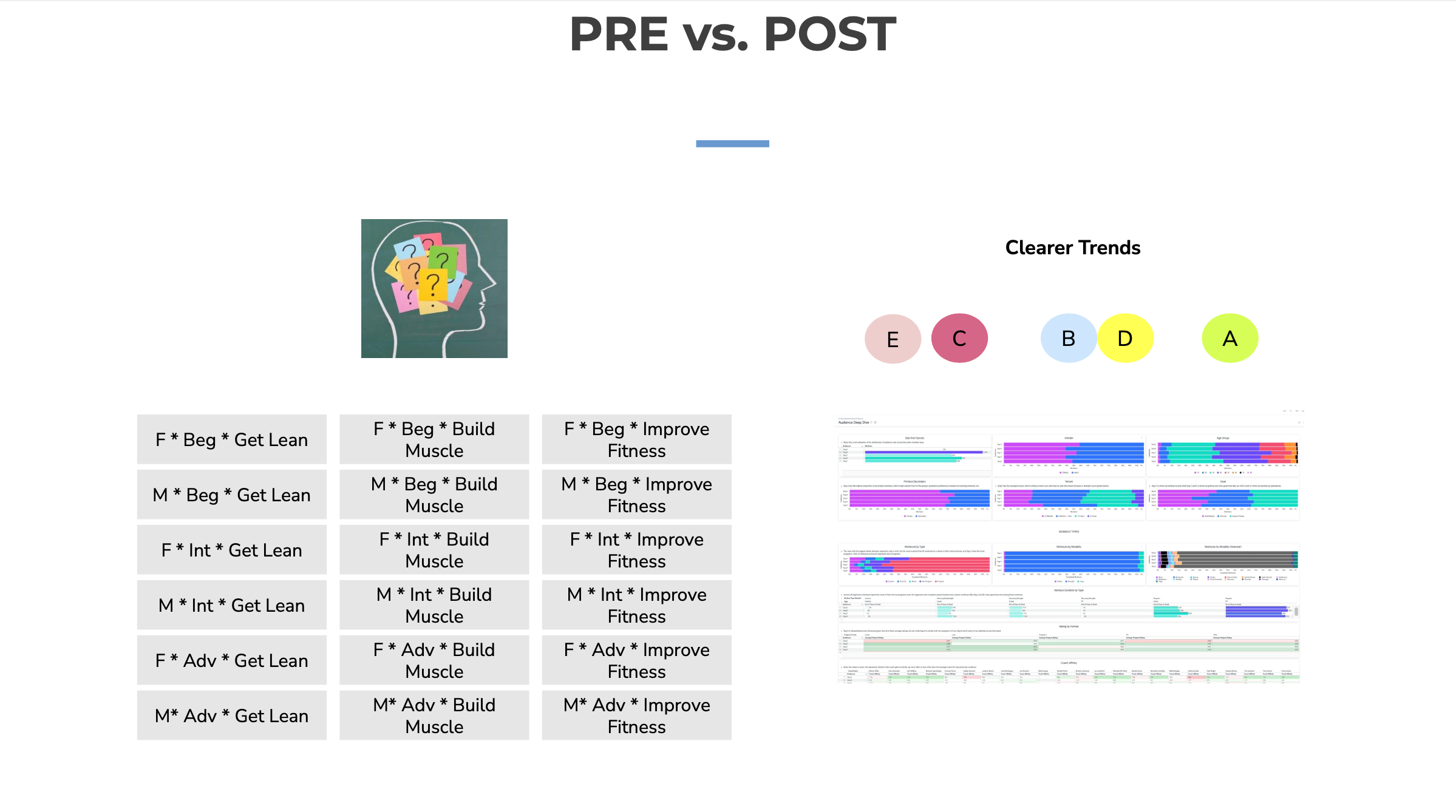
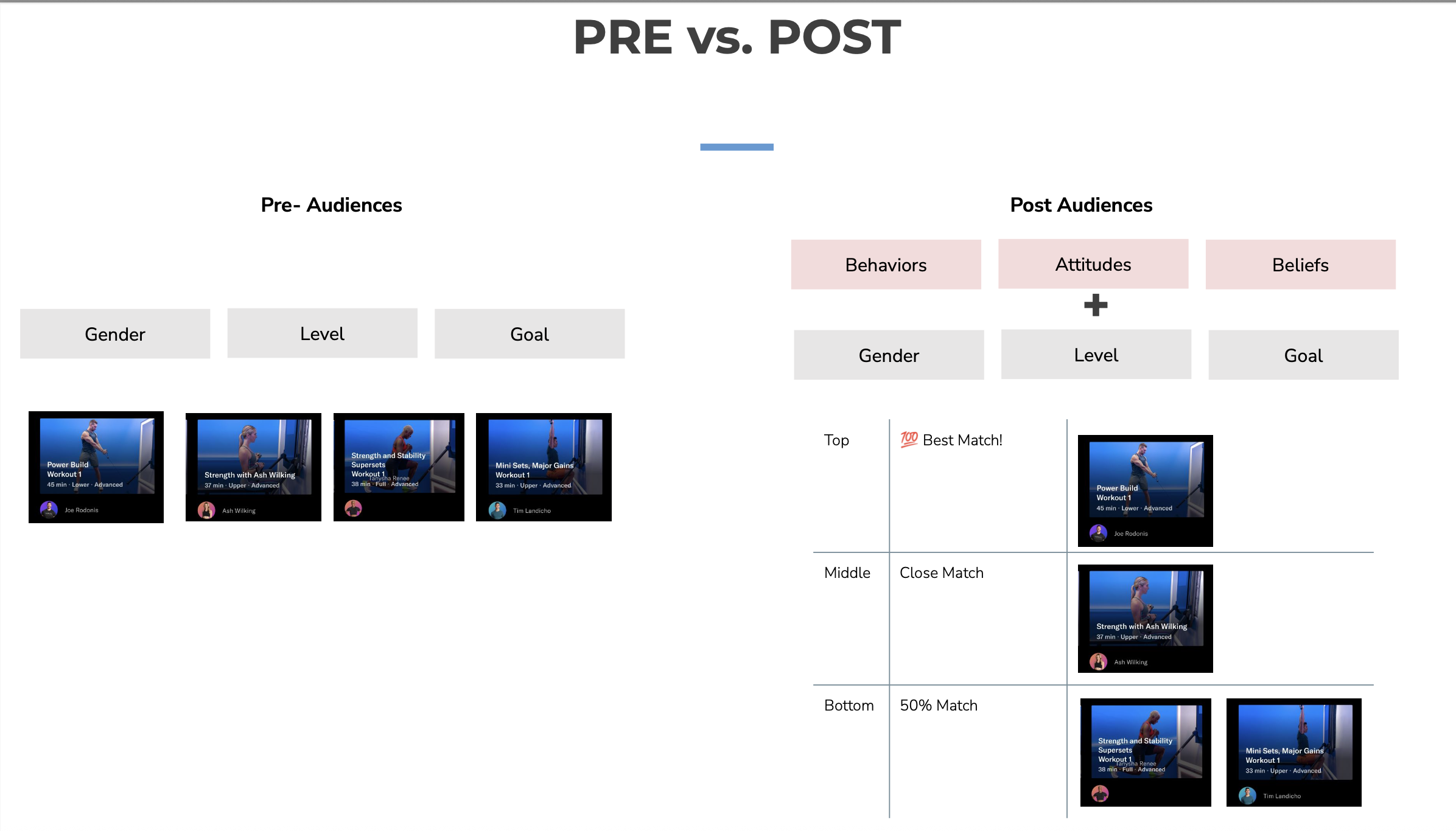
Shifted from demographic-only targeting to a motivation-based segmentation revealing clear behavioral trends.
Evolved personalization from static gender/goal rules to dynamic profiles combining beliefs, behaviors, and attitudes.
Phase 3 — Translate to Action
Collaborated with Marketing + Creative to shift messaging from “elite performance” to “confidence & capability.”
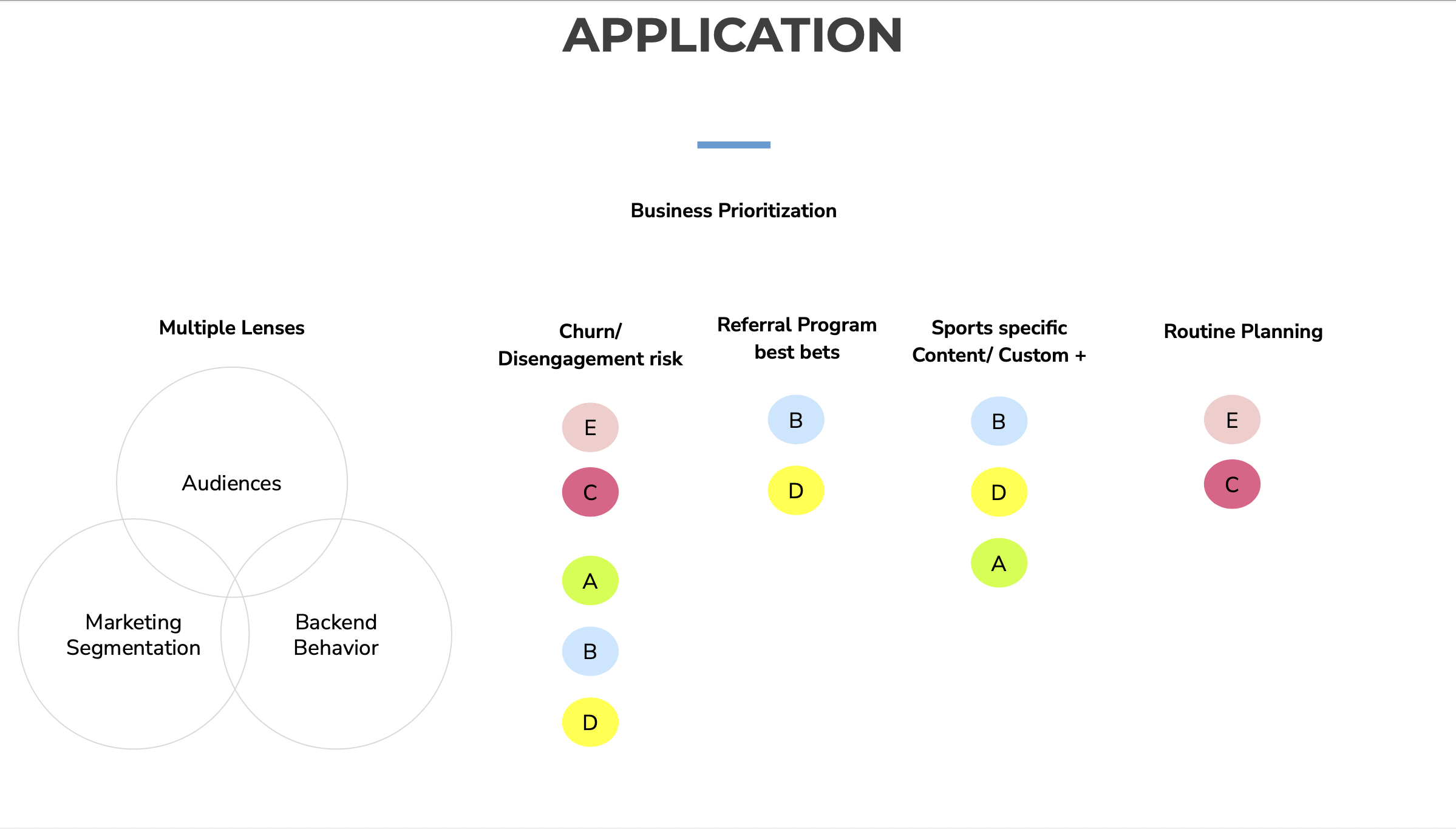
Partnered with Product + Growth to embed motivation typing into the personalization engine.
Created the first motivation-driven personalization engine in Tonal’s history.
Delivered measurable ROI through improved targeting and content matching.
Reframed Tonal’s brand narrative → from “performance” to “confidence & capability.”
Leadership & Influence
Principal-level IC (L8) · Built research function from zero → org-wide impact
Defined research infrastructure and cross-org collaboration model.
Unified Product, Marketing, and Data Science under shared audience framework.
Mentored PMs and Data Science partners on mixed-method validation and ML feature mapping.
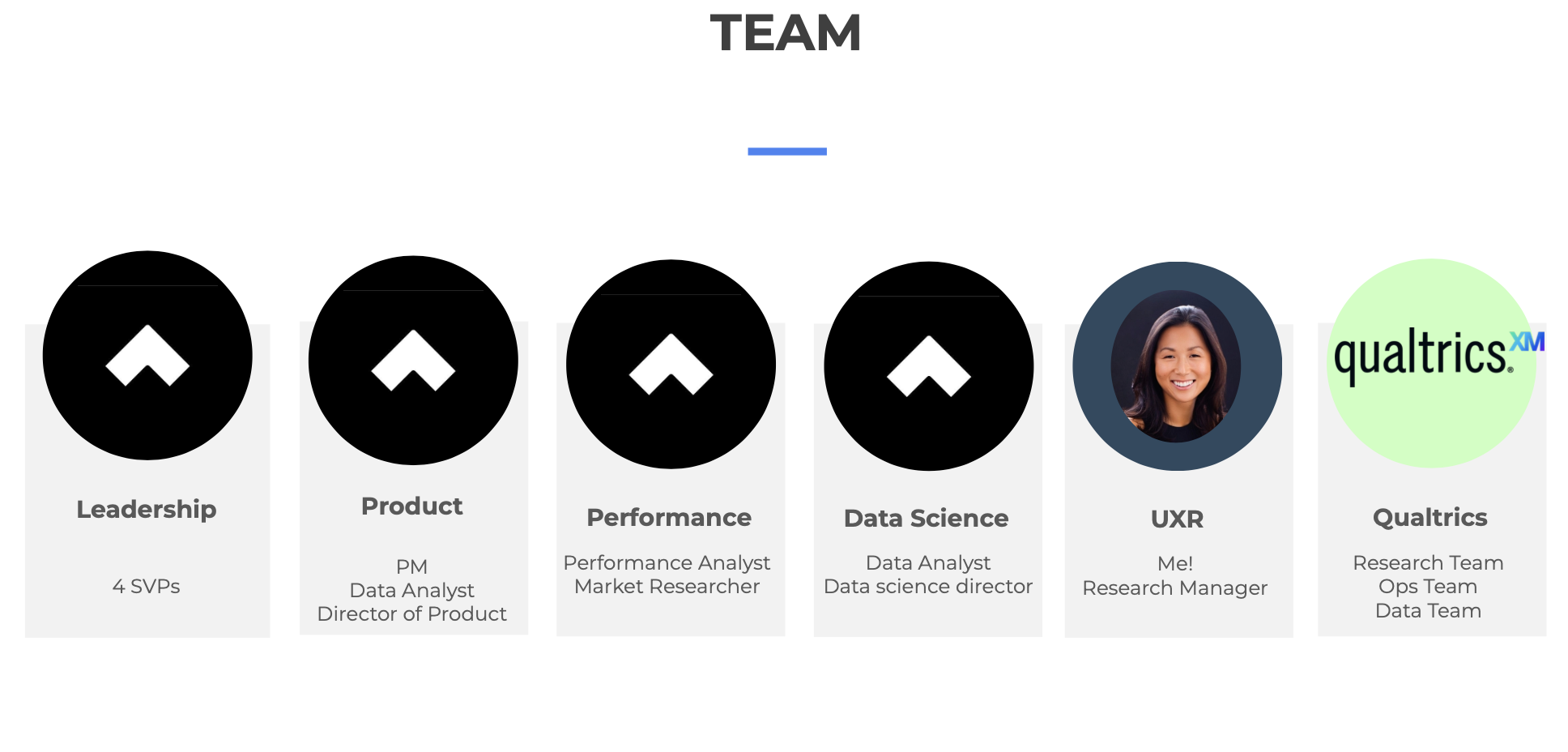
Cross-functional partnership between Research, Product, Marketing, and Data Science to operationalize motivational insights.
Organizational Impact
Established a repeatable model for translating human motivation into machine-learning systems. The motivation framework is now used across Tonal’s personalization roadmap, ad targeting, and creative testing to drive consistent, user-aligned growth.