Building the Retention Engine: Faster Refills, Ongoing Trust
Overview
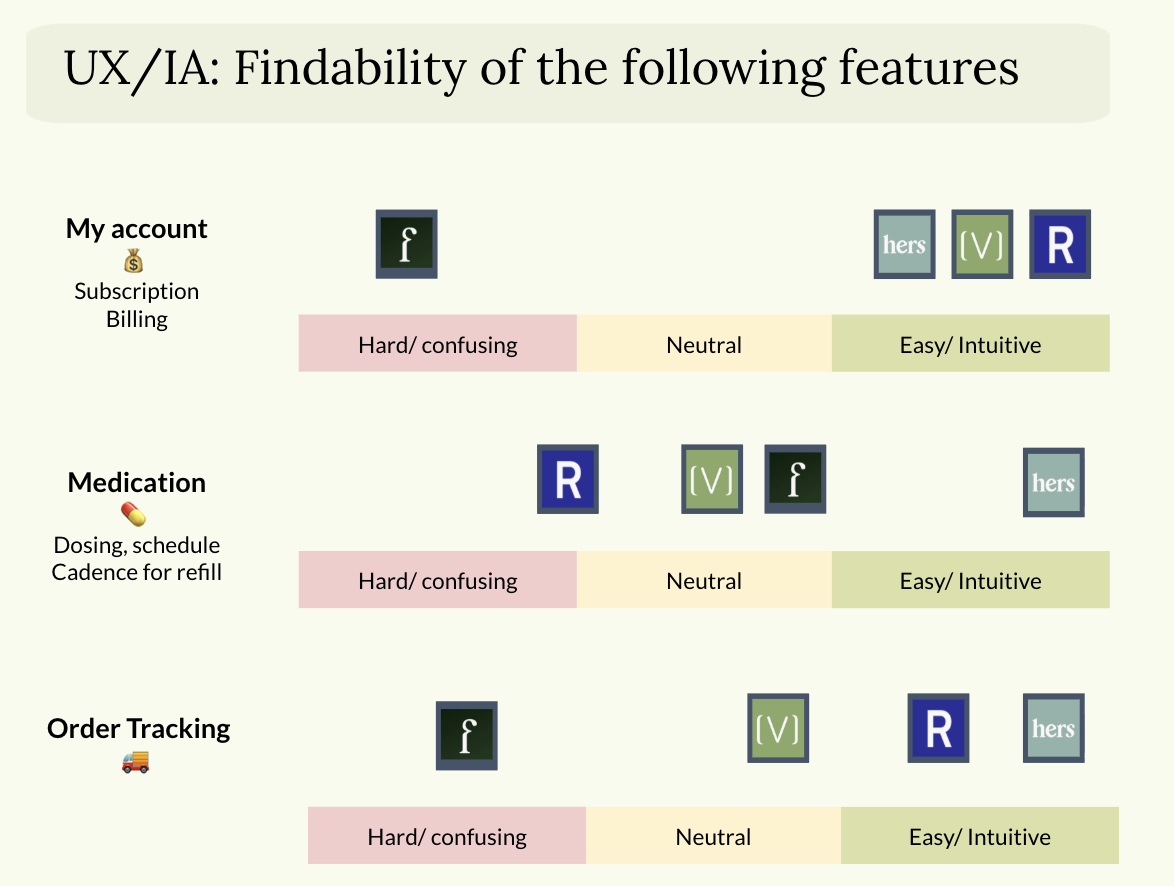
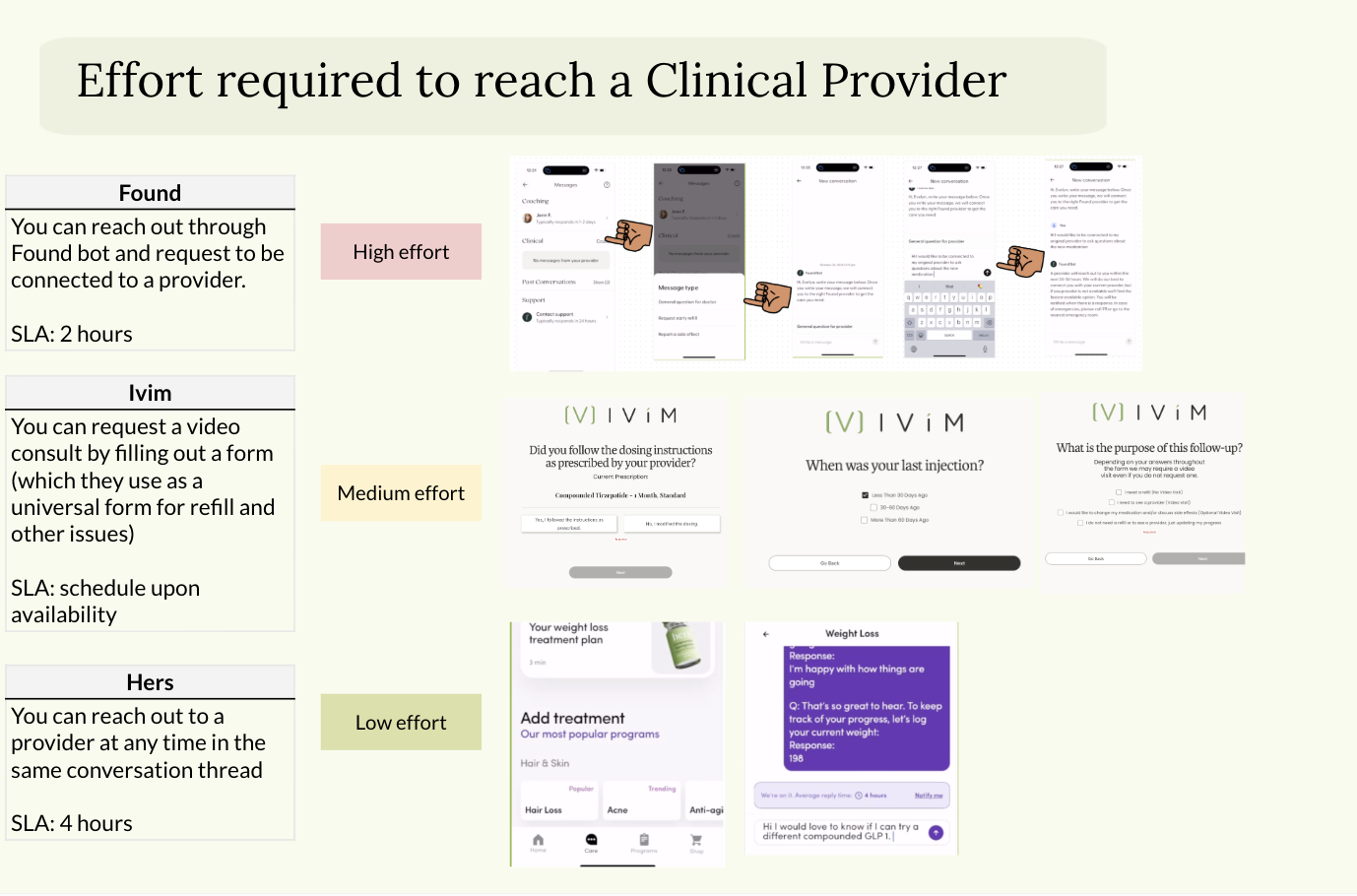
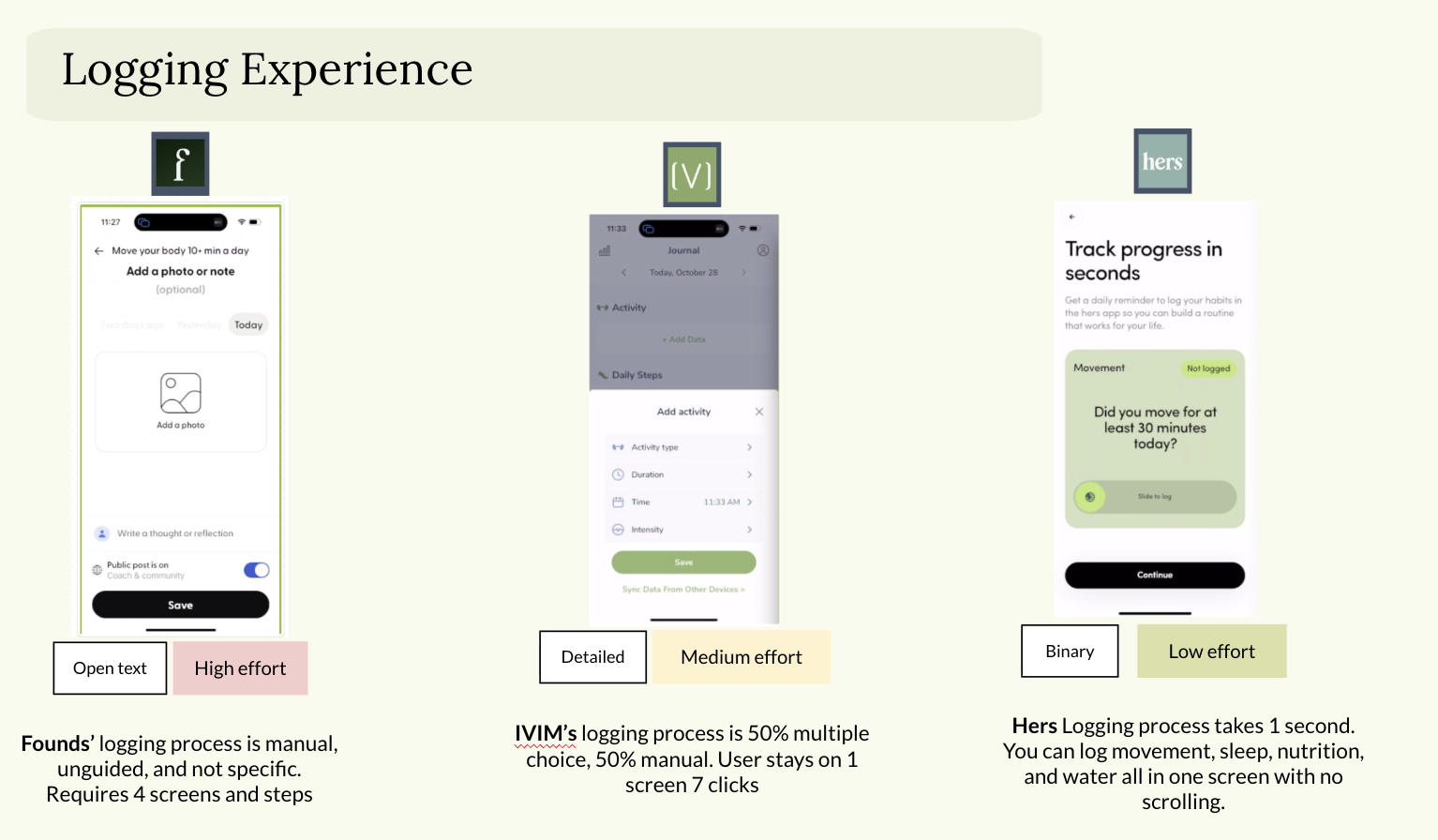
After improving the first-consult experience, retention still dropped at month 2. To reach profitability, Found needed users to complete the second consult and remain active through month 6. I led a second phase of competitive and behavioral research focused on refill journeys, re-consult triggers, and engagement design beyond the first 30 days.
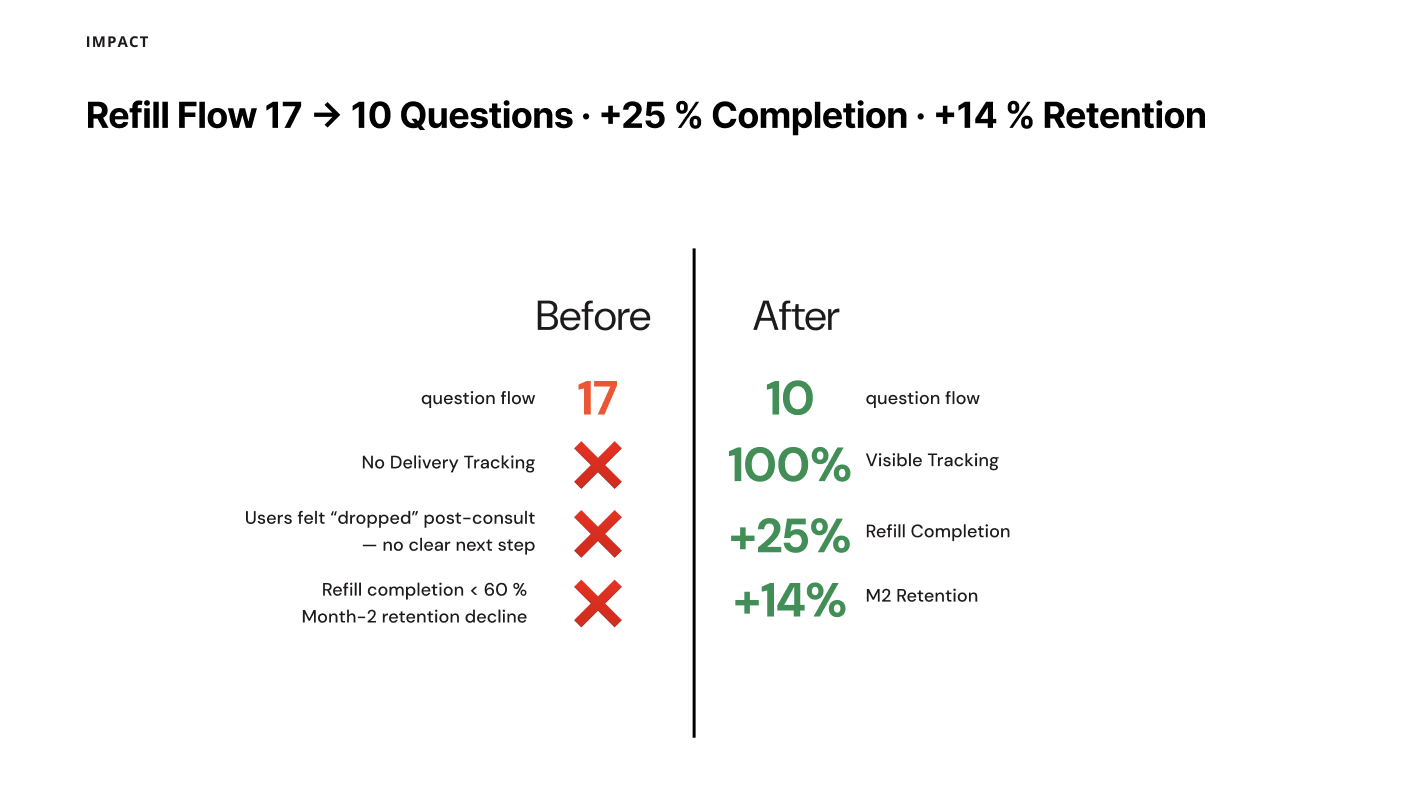
The study uncovered structural friction in refill UX and ownership gaps between Product and Clinical Ops — and resulted in a redesigned refill flow that raised refill completion 25 % and month-2 retention 14 %.
Reduced refill flow from 17 → 10 questions and removed duplicate verification steps.
Introduced automated reminders and visible status tracking in the app.
Clarified team ownership (Product vs. Ops) and added cross-team SLA dashboard.
Established ongoing quarterly benchmark reviews for continuous improvement.
Impact
Refill completion +25 % · M2 retention +14 % · Time-to-refill −22 h Defined the six-month engagement blueprint now used across all care verticals.
Leadership & Influence
Principal–Director (L8–L9) scope · Cross-org initiative shaping retention strategy. Unified Product, Clinical Ops, and Data around a single post-purchase dashboard. Mentored PMs + Designers on competitive-analysis → roadmap translation.
Organizational Impact
Together, the two research phases transformed Found’s post-purchase journey from reactive to proactive — setting a new bar for speed, transparency, and value communication. The framework is now embedded in Product Ops and used to assess every new experience launch.