DoorDash Merchant Experience — Building the Hospitality System Blueprint
Overview
In 2021, DoorDash had scaled fast but lacked a shared understanding of what “merchant experience” meant. Each team — Product, Operations, Marketing, and Sales — managed its own slice of the merchant journey. The result: fragmented tools, inconsistent service, and a growing gap between the merchants powering the platform and the teams building for them.
As DoorDash absorbed Caviar and accelerated into new categories (grocery, retail, convenience), this fragmentation became an existential risk. I was brought in to lead the first-ever foundational discovery of the Merchant Experience, uniting the company around one question:
“What does hospitality mean when the host is a platform, and the guest is a business?”
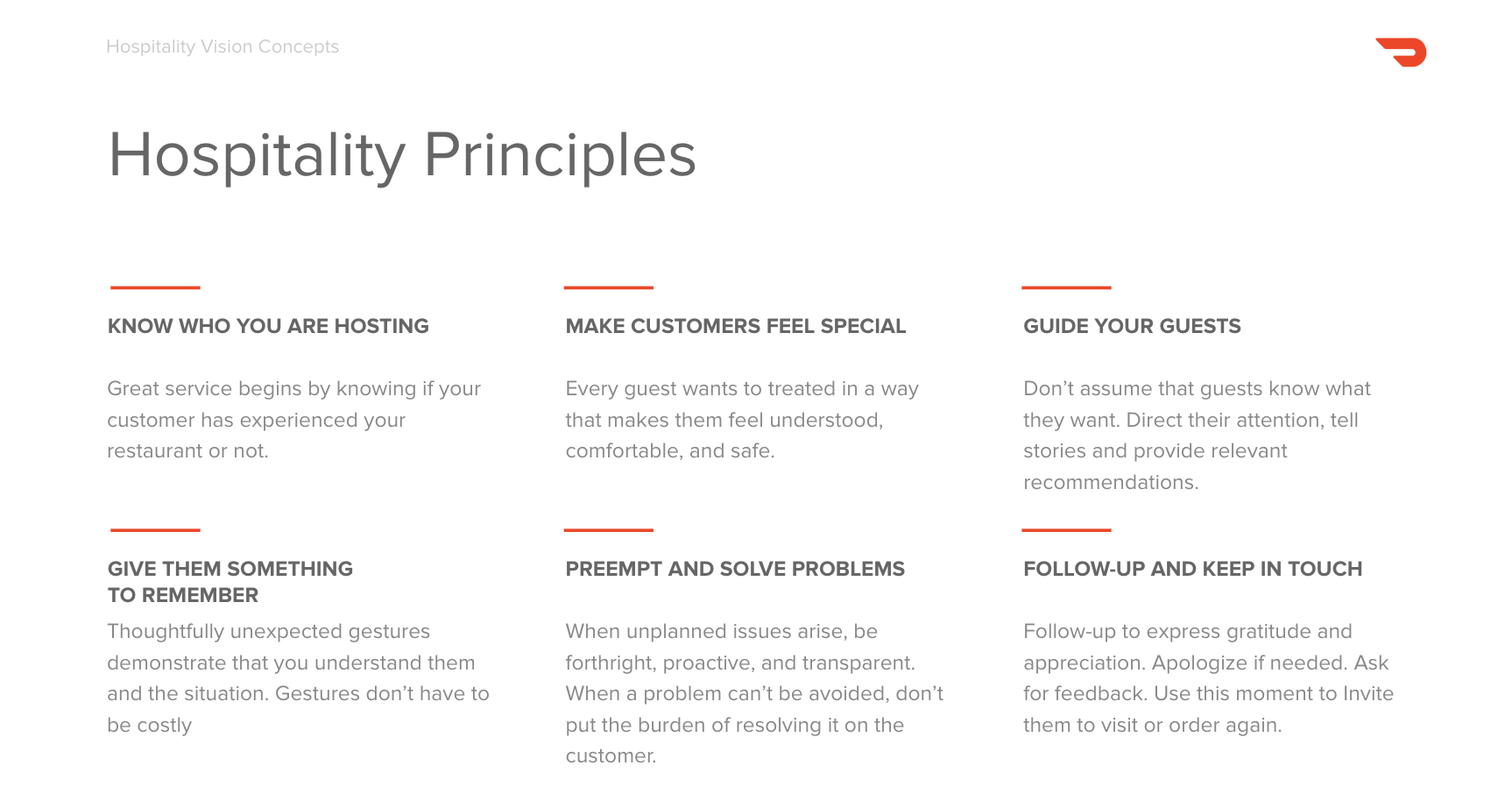
Defined the six principles of platform hospitality — grounding DoorDash’s service philosophy in empathy, anticipation, and care.
Over six months, I led a multi-method, cross-org research initiative spanning 20+ interviews, quantitative segmentation, and journey mapping across every merchant type — from independent restaurants to national chains.
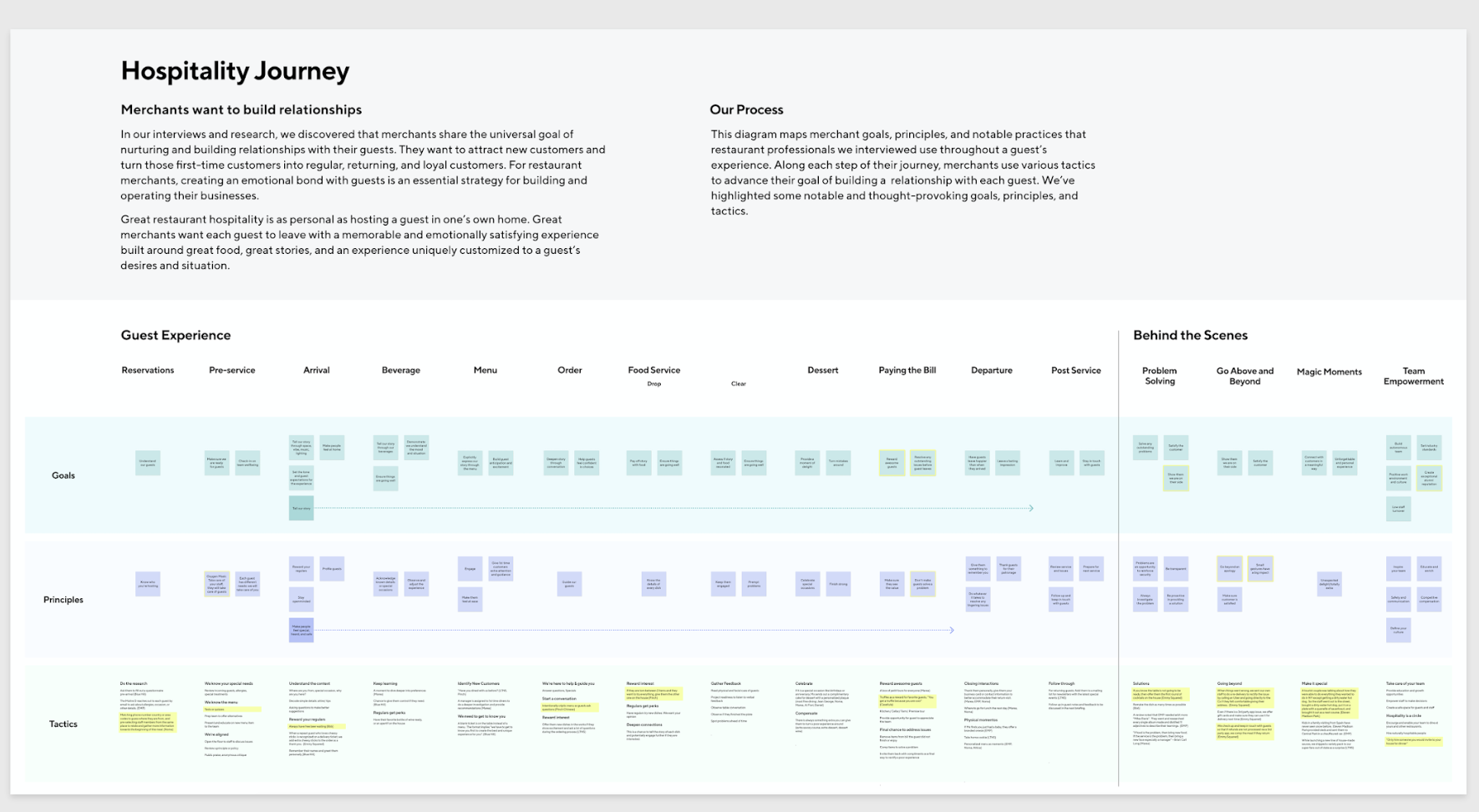
Mapped the merchant lifecycle end to end — revealing friction, handoff gaps, and hidden opportunities across touchpoints.
We synthesized this work into DoorDash’s first Merchant Hospitality System Blueprint — a service model defining how product, operations, and support deliver value across the merchant lifecycle.
Identified three core value pillars — Transparency, Empowerment, and Partnership — guiding every merchant-facing product and policy.
The framework didn’t just diagnose problems — it redefined priorities. It shaped five new product directions, aligned three orgs under a unified hospitality vision, and became the foundation for 2021 OKRs across Product, Merchant Ops, and GTM.
Business Challenge
Merchant experience was siloed across teams, tools, and touchpoints.
No unified definition of success, value, or service for merchants.
COVID and the Caviar acquisition disrupted expectations and operational norms.
Leadership needed a north star for how to serve diverse merchant types — from small businesses to premium brands.
Approach
Phase 1 — Discover
Conducted foundational qualitative discovery (120+ interviews, multi-region) with SMBs, enterprise partners, and premium brands.
Ran quantitative segmentation to identify behavioral and operational archetypes.
Shadowed onboarding, support, and growth teams to map real-world service touchpoints.
Phase 2 — Define
Synthesized findings into the Merchant Journey Framework and Hospitality Principles — defining what good service feels like for merchants.
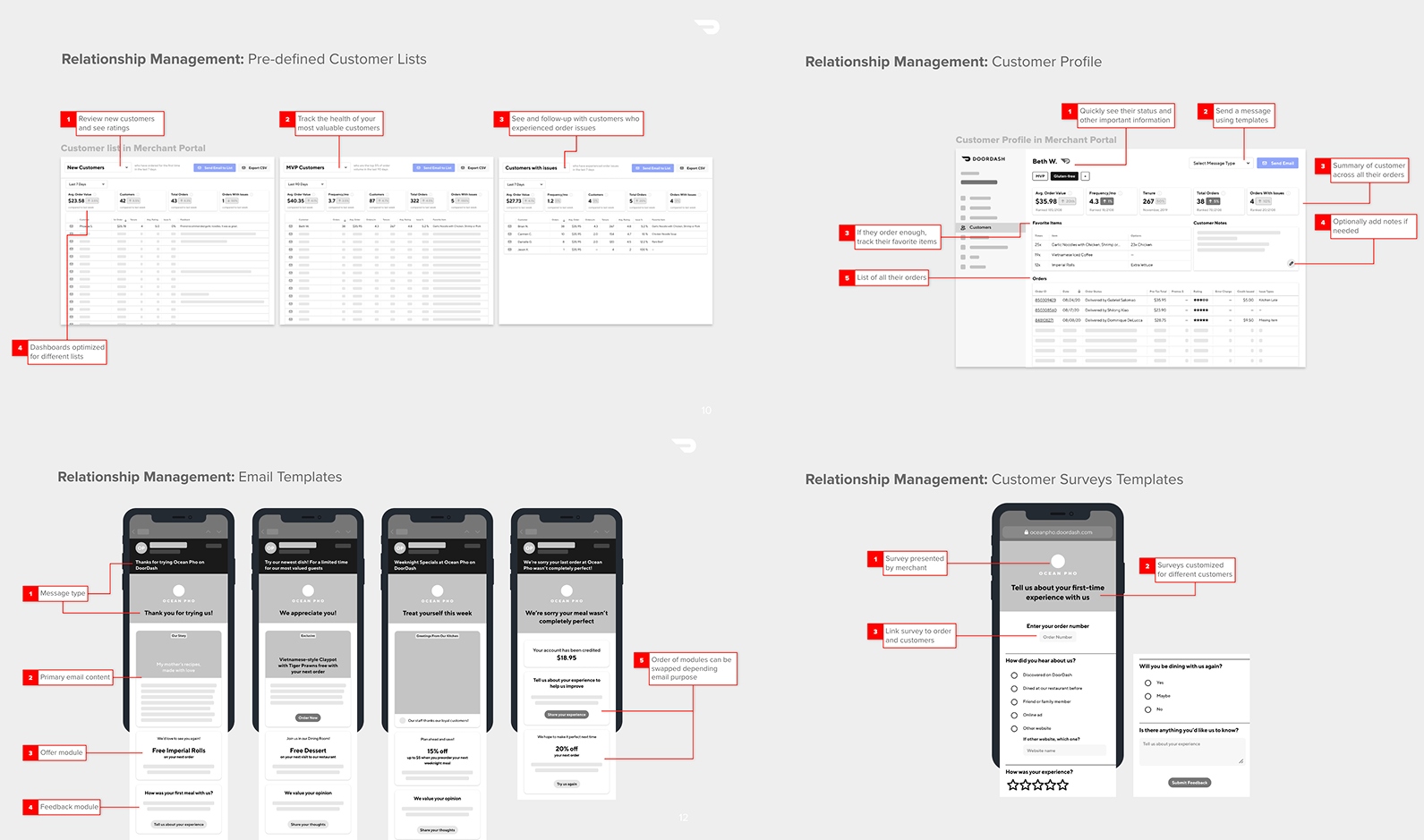
Built the Merchant Service Blueprint, connecting tools, policies, and communications across the lifecycle.
Identified 3 key value drivers: Transparency, Empowerment, Partnership.
Phase 3 — Align & Deliver
Facilitated cross-functional workshops and executive offsites with the VP Product, COO, and PMM to translate insights into strategy.
Defined shared merchant-centric OKRs and annual roadmap priorities across Product, Ops, and GTM.
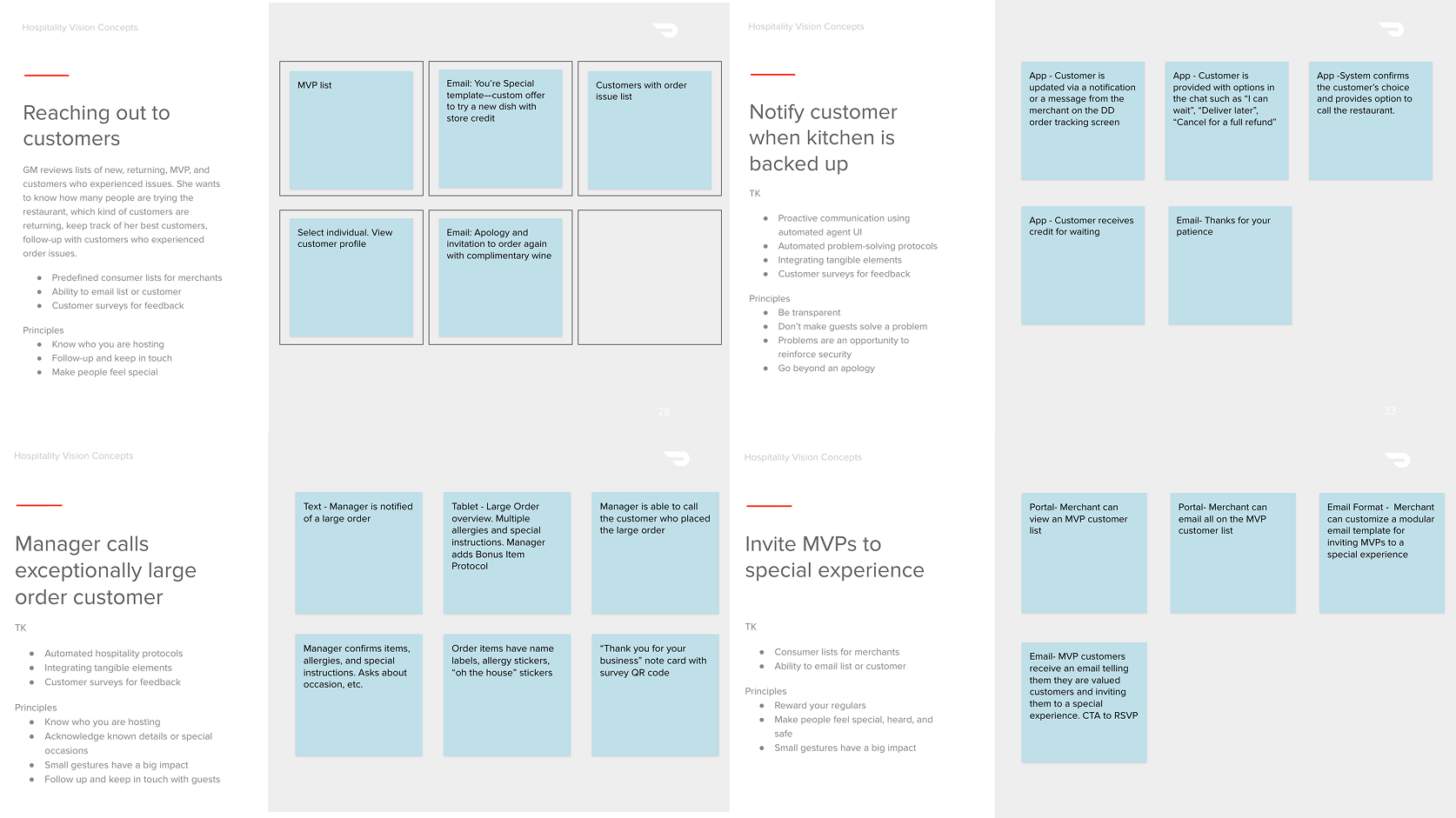
Partnered with Design and PMs to operationalize the blueprint into five product initiatives:
“Ship from Anywhere” – multi-location fulfillment system
“Gifting” – extending brand reach through social delivery
“Order Ahead” – scheduling to improve kitchen throughput
“Merchant Onboarding Redesign” – clarity and trust during setup
“Premium Tier” – dedicated service for high-value merchants (Caviar integration)
Modeled cross-functional service scenarios — translating hospitality principles into operational behaviors and design decisions.
Insights
Hospitality = Predictability + Partnership: merchants valued clear communication and proactive support more than incentives.
Experience gaps were systemic: not missing features, but missing orchestration between product, policy, and service.
Internal misalignment was the biggest source of merchant friction — not the UX itself.
Impact
5 new product initiatives launched · Merchant activation & retention ↑ · Unified 3 orgs under shared OKRs
Created DoorDash’s first Merchant Hospitality System Blueprint, now the reference model for merchant experience design.
Reframed product and ops from transactional support → relationship-driven partnership.
Directly influenced 2021 OKRs and org-wide roadmap, spanning 3 departments.
Leadership & Influence
Principal (L8) scope — organizational systems change:
Defined a new research discipline (Merchant Experience) and embedded it into product planning.
Partnered with COO and VP Product to shape multi-org annual strategy and expansion priorities.
Facilitated executive alignment sessions — translating research into language of revenue, retention, and operational efficiency.
Mentored PMs and PMMs on systems thinking and journey synthesis.
Organizational Impact
This project was a tectonic shift in how DoorDash understood its marketplace. It replaced fragmented, reactive initiatives with a shared hospitality vision — connecting product design, operational systems, and go-to-market strategy under one framework.
The Merchant Hospitality Blueprint became the foundation for all merchant-facing initiatives, guiding how the company designs, communicates, and scales service across verticals.
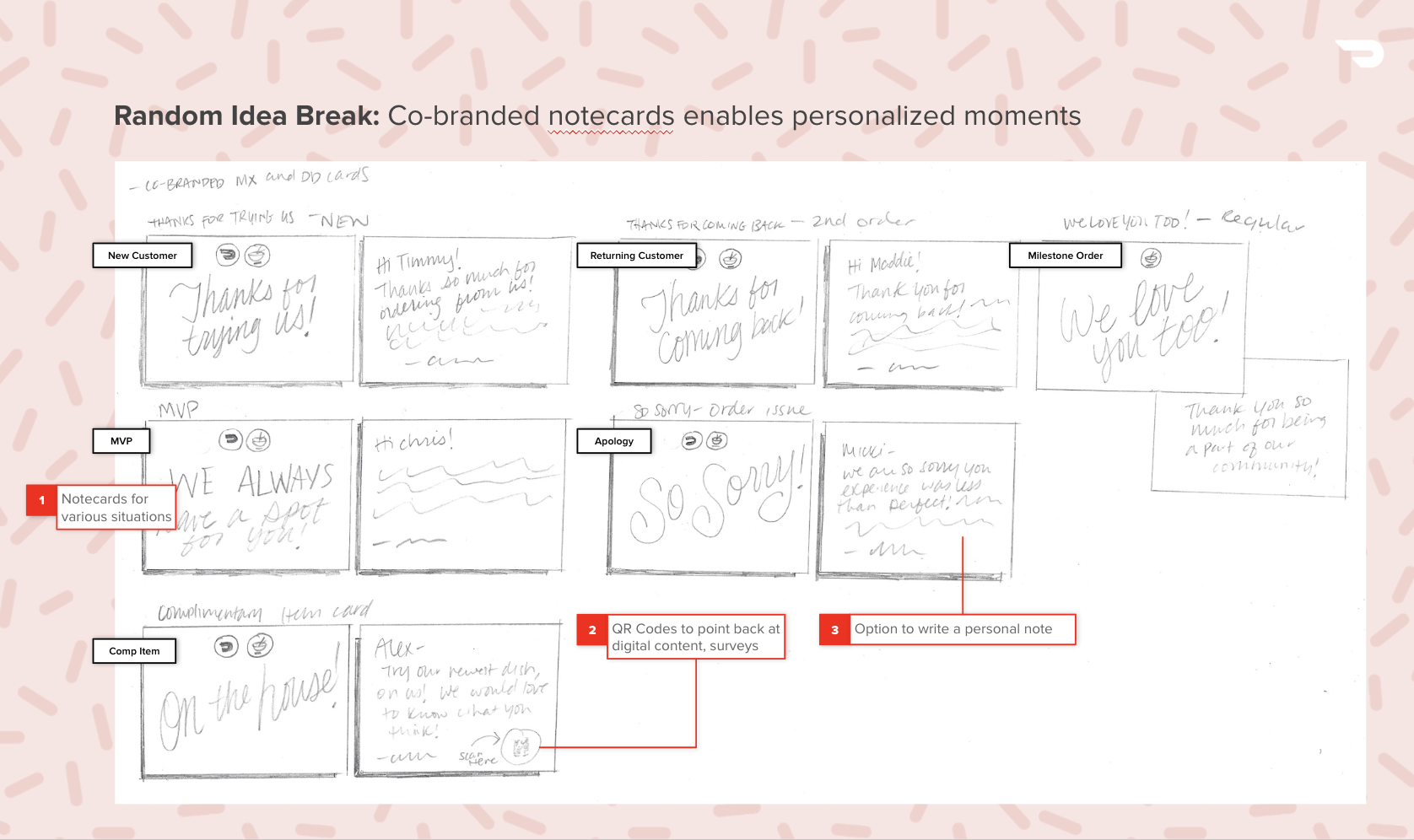
Codified “Magic Moments” — embedding hospitality behaviors into DoorDash’s product and culture to sustain long-term merchant trust.