+12% Adoption, reduced onboarding time 25% across 100+ merchants.
DOMAIN
B2B / eCommerce / Platform
SCOPE & INFLUENCE
Multi-org initiative spanning Product, PMM, and Sales Ops · Deep quant + qual segmentation informing pricing, feature roadmap, and GTM strategy for SMB → Enterprise
MY ROLE
Owned segmentation and pricing research; aligned PMM, Sales, and Eng.
Storefront — Merchant Segmentation & Go-to-Market Research for B2B Growth
Overview
Storefront was DoorDash’s white-label eCommerce product — a tool that allowed merchants to power their own branded ordering websites with DoorDash fulfillment. Despite its promise, adoption was low and activation rates were flat. SMBs found setup intimidating, mid-market partners were confused by pricing, and enterprise clients demanded deeper integration with their own POS and marketing systems.
I led a B2B segmentation, pricing, and GTM research program to answer one core question:
“What’s preventing merchants from adopting Storefront, and how do we turn it into a platform they trust, value, and expand with?”
This initiative became the blueprint for Storefront’s growth. Over six weeks, we went from diagnosing adoption friction → building a new segmentation and pricing model → shipping feature and business design updates that increased activation, retention, and ARPU.
Business Challenge
Subpar activation and retention; merchants dropping off post-signup.
Generic one-size-fits-all messaging and pricing created confusion.
Support costs were rising due to manual setup needs.
Enterprise clients requested POS integration and brand control.
Teams (PMM, Product, and Sales) lacked a shared segmentation or GTM framework.
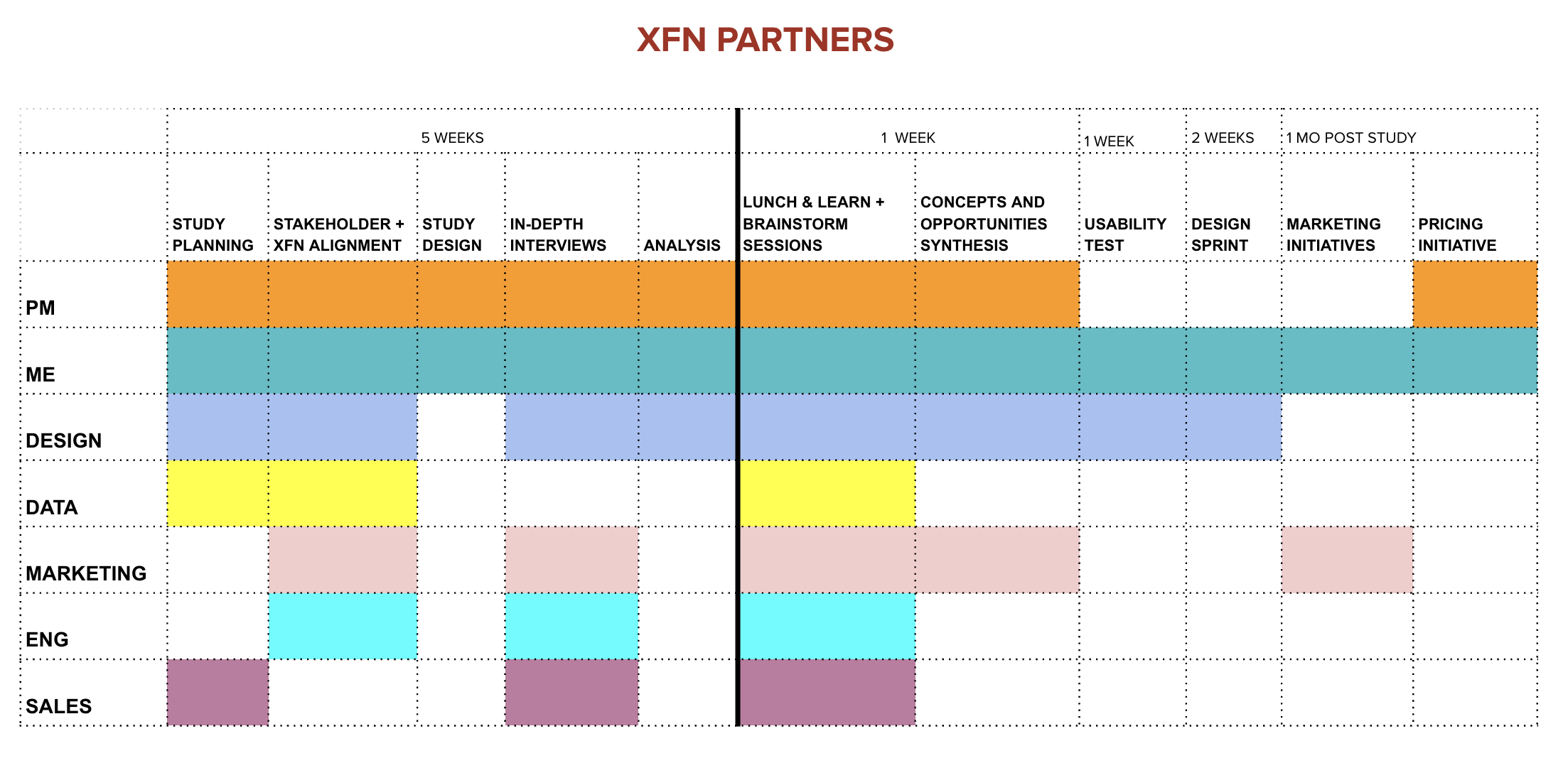
Cross-functional study timeline — aligned PM, Product Marketing, Sales, and Design across a 10-week research and GTM sprint.
Approach
Phase 1 — Market & Benchmarking
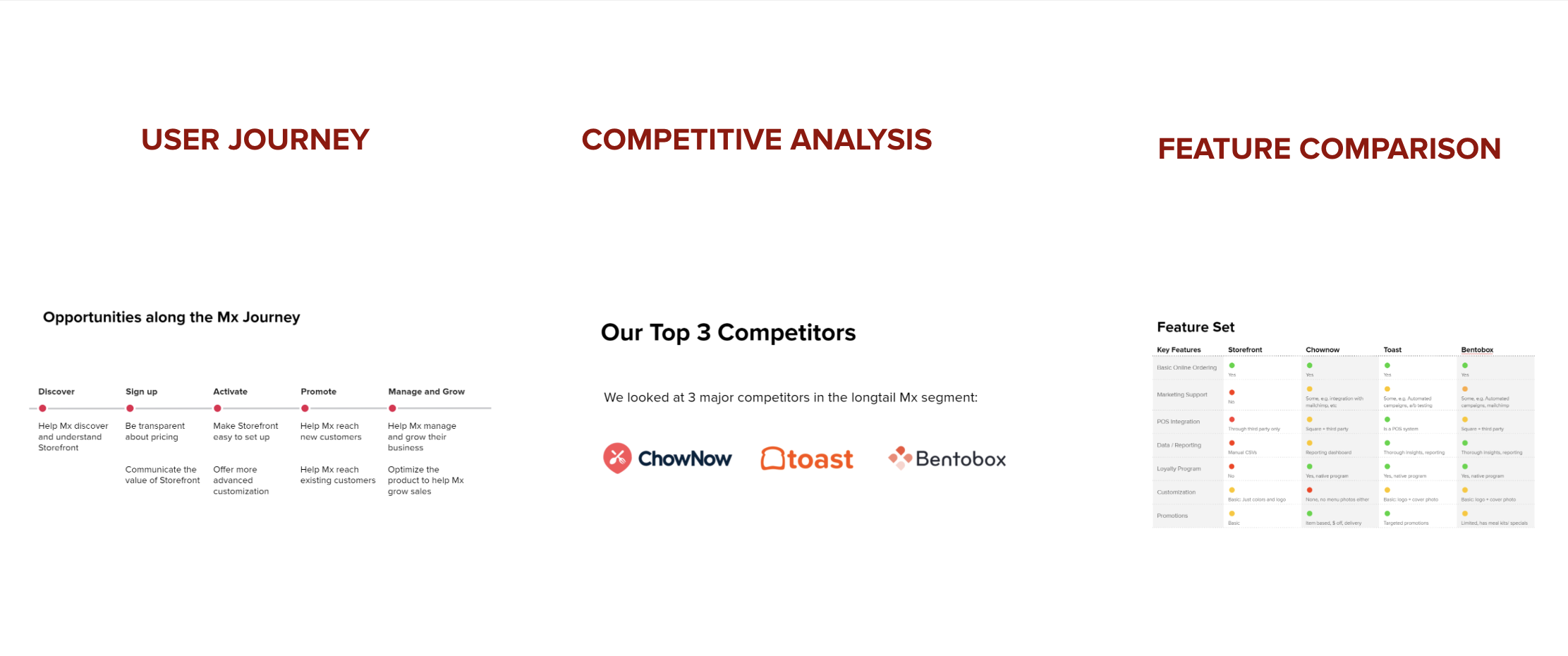
To establish context, I led a competitive intelligence scan across six leading white-label and POS-integrated ordering systems (Olo, Toast, ChowNow, Square, BentoBox, GloriaFood).
This market scan revealed a whitespace: competitors charged transparently and offered brand-control features, while Storefront’s pricing was opaque and its UX felt too “DoorDash-branded” for independent businesses.
Mapped the full merchant journey and competitive landscape — identifying activation friction, feature gaps, and opportunities to differentiate Storefront from key competitors (ChowNow, Toast, BentoBox).
Phase 2 — Segmentation & Journey Mapping
Designed and executed a mixed-method segmentation study to understand adoption barriers and drivers across merchant maturity levels.
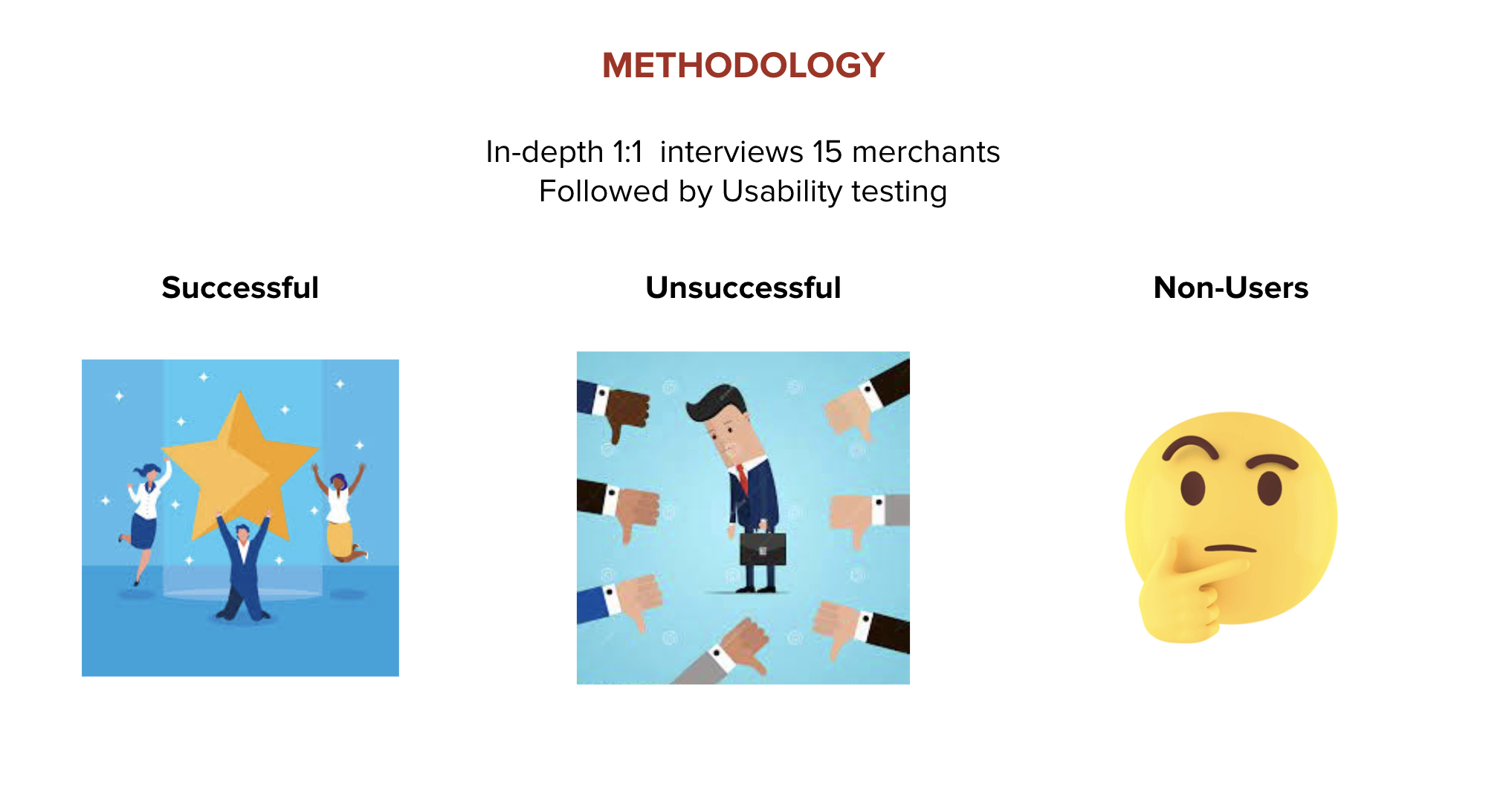
In-depth interviews (n=15) with successful adopters, drop-offs, and non-adopters.
Mapped three distinct B2B merchant journeys (SMB, Mid-Market, Enterprise), highlighting where trust broke down and adoption stalled.
Mixed-method design — 15 in-depth merchant interviews paired with usability testing to uncover adoption barriers across cohorts.
Phase 3 — Pricing & Feature Optimization
To design a more compelling business model, I ran a Van Westendorp pricing sensitivity analysis and a conjoint study modeling feature-value tradeoffs. We evaluated willingness to pay across features like:
Customization and brand control
CRM and analytics
Marketing automation
POS integration
The data revealed clear pricing thresholds and a preference for tiered packaging that matched technical capability.
Phase 4 — Synthesis → GTM & Product Strategy
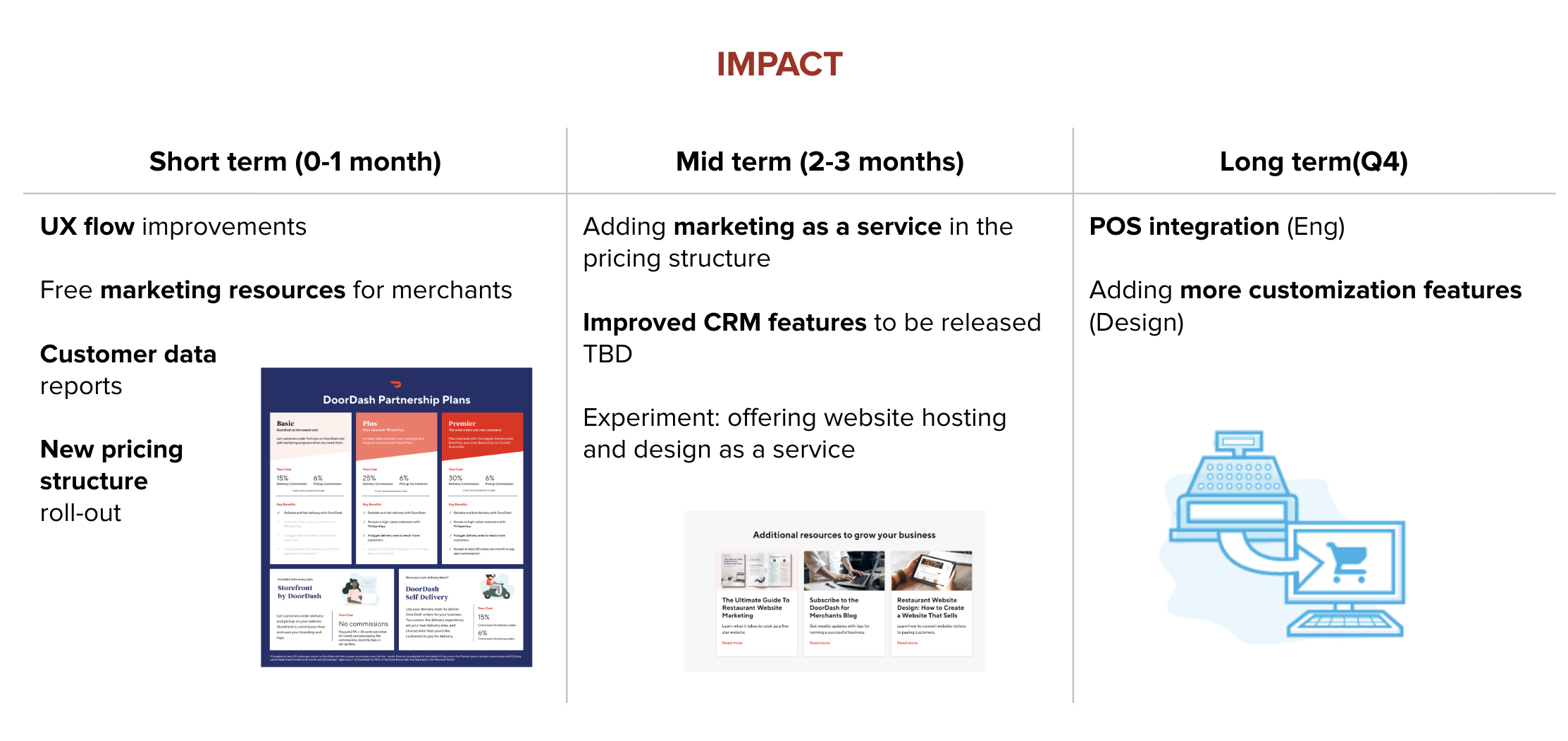
Created 3-tier pricing & packaging model mapped to merchant maturity.
Facilitated cross-functional workshops with PMM, Product, and Sales to translate findings into a unified GTM strategy.
Partnered with PMs and Engineers to embed insights into platform features:
Marketing-as-a-Service: lightweight marketing toolkit to boost SMB traffic.
CRM dashboard redesign with lifecycle analytics and engagement metrics.
POS integration roadmap for seamless enterprise adoption.
Enhanced personalization tools enabling merchants to brand and customize their storefronts.
Insights
Top adoption driver: clarity of pricing and integration simplicity.
Biggest friction: merchants felt the product “wasn’t built for their size.”
Marketing capability, not revenue, predicted success.
Customization and brand storytelling were key to perceived legitimacy and long-term retention.
Enterprise partners required ecosystem integration, not just feature parity.
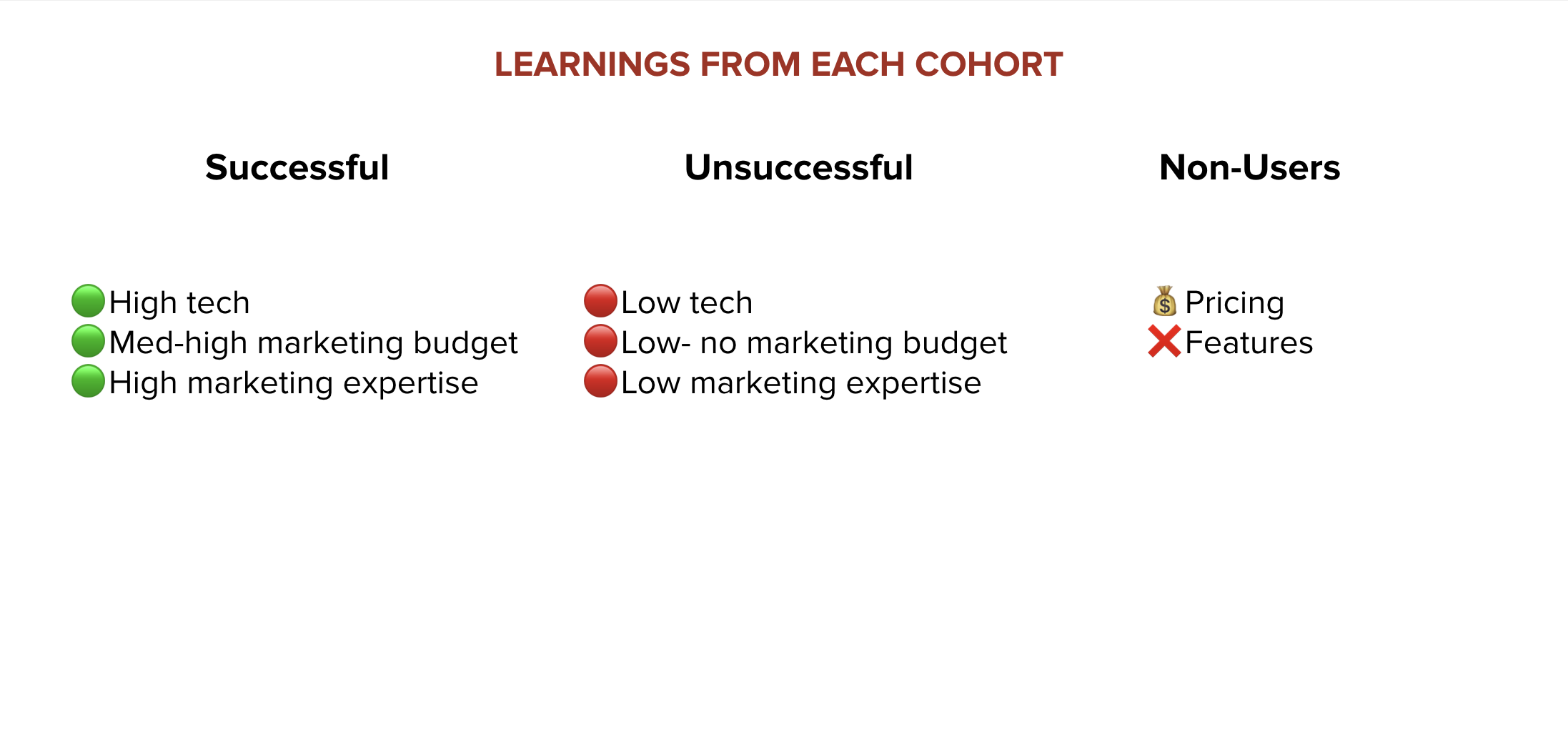
Segmented findings by success profile — highlighting the technical, budgetary, and marketing capabilities that predict activation.
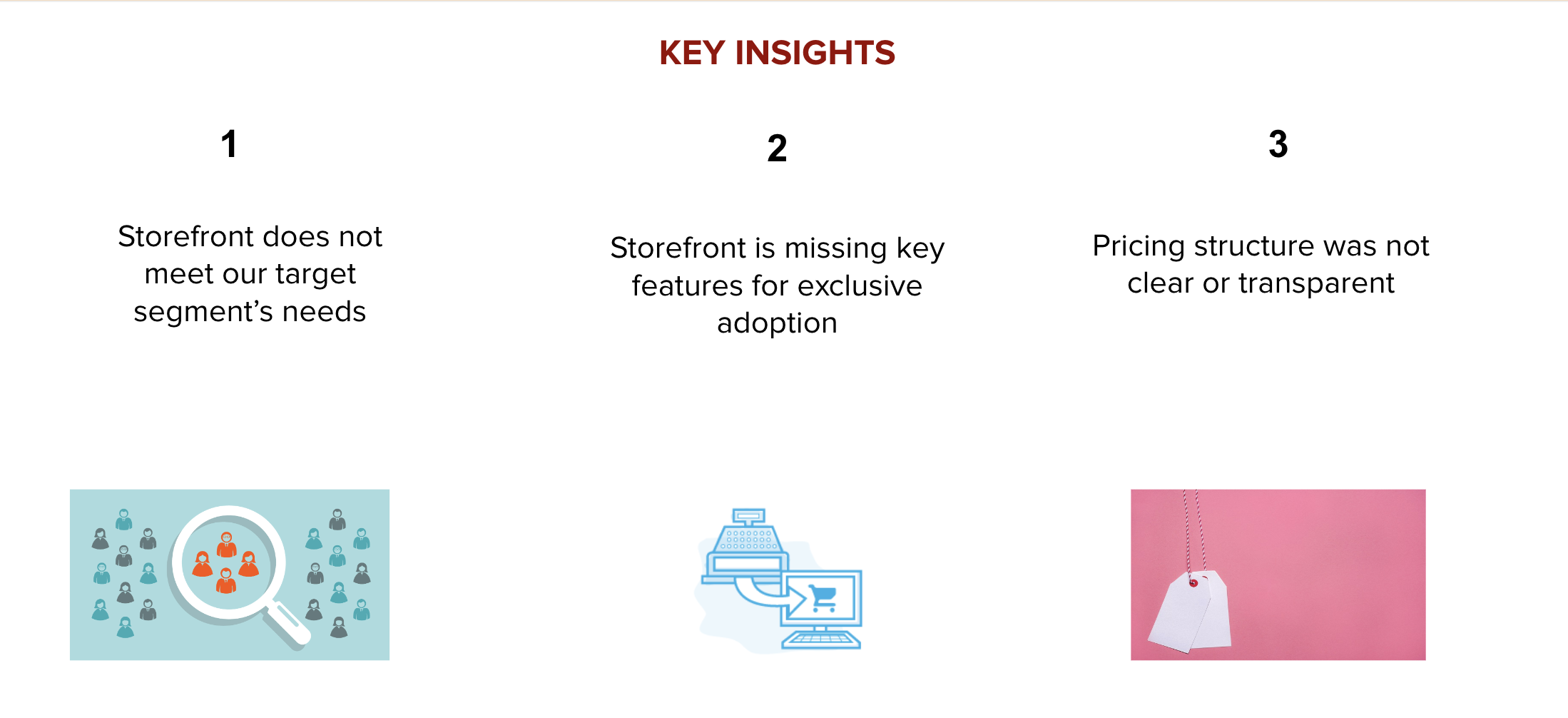
Surfaced three primary barriers to adoption — unclear pricing, missing features, and weak fit with target segments.
Developed merchant personas reflecting behavioral, operational, and technical maturity — from “Newbie” to “Wealthy Novice.”
Redesigned pricing model using conjoint and elasticity modeling: moved from flat fees to tiered structure that improved perceived fairness and trust.
Added Marketing-as-a-Service, boosting ARPU and helping SMBs self-promote.
Launched CRM dashboard upgrade, driving faster onboarding and engagement visibility.
Developed POS integration roadmap, reducing enterprise setup time and creating ecosystem stickiness.
Introduced storefront customization tools, allowing merchants to reflect their own brand identity.
Roadmap impact — new tiered pricing, marketing-as-a-service, and CRM features driving sustained B2B growth.
Leadership & Influence
Senior–Principal (L7–L8) scope:
Led research spanning Product, PMM, Sales, and Engineering.
Unified teams through structured workshops and GTM offsites.
Mentored PMMs on segmentation and pricing methodologies.
Elevated research from insight → business model design → execution.
Organizational Impact
This project reframed Storefront from a transactional product into a strategic growth platform. By aligning pricing, product design, and GTM messaging with real merchant needs, we transformed adoption and retention trajectories.
The work established a repeatable framework for B2B research-driven strategy — combining segmentation, pricing science, and product vision to guide how DoorDash builds and monetizes merchant-facing platforms at scale.