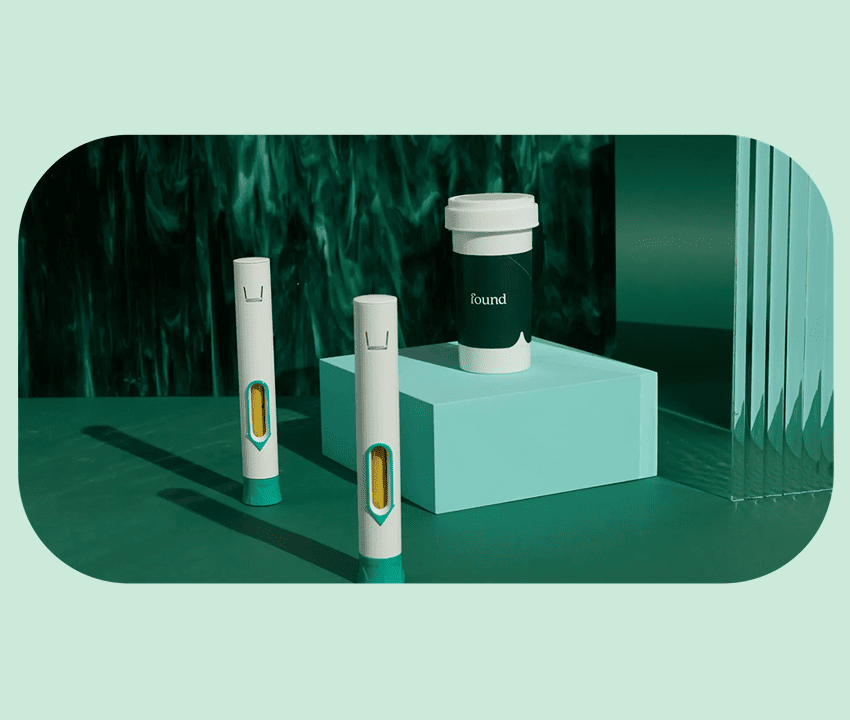
Launching a new healthcare vertical from zero → +$31 K revenue in 6 weeks
Overview
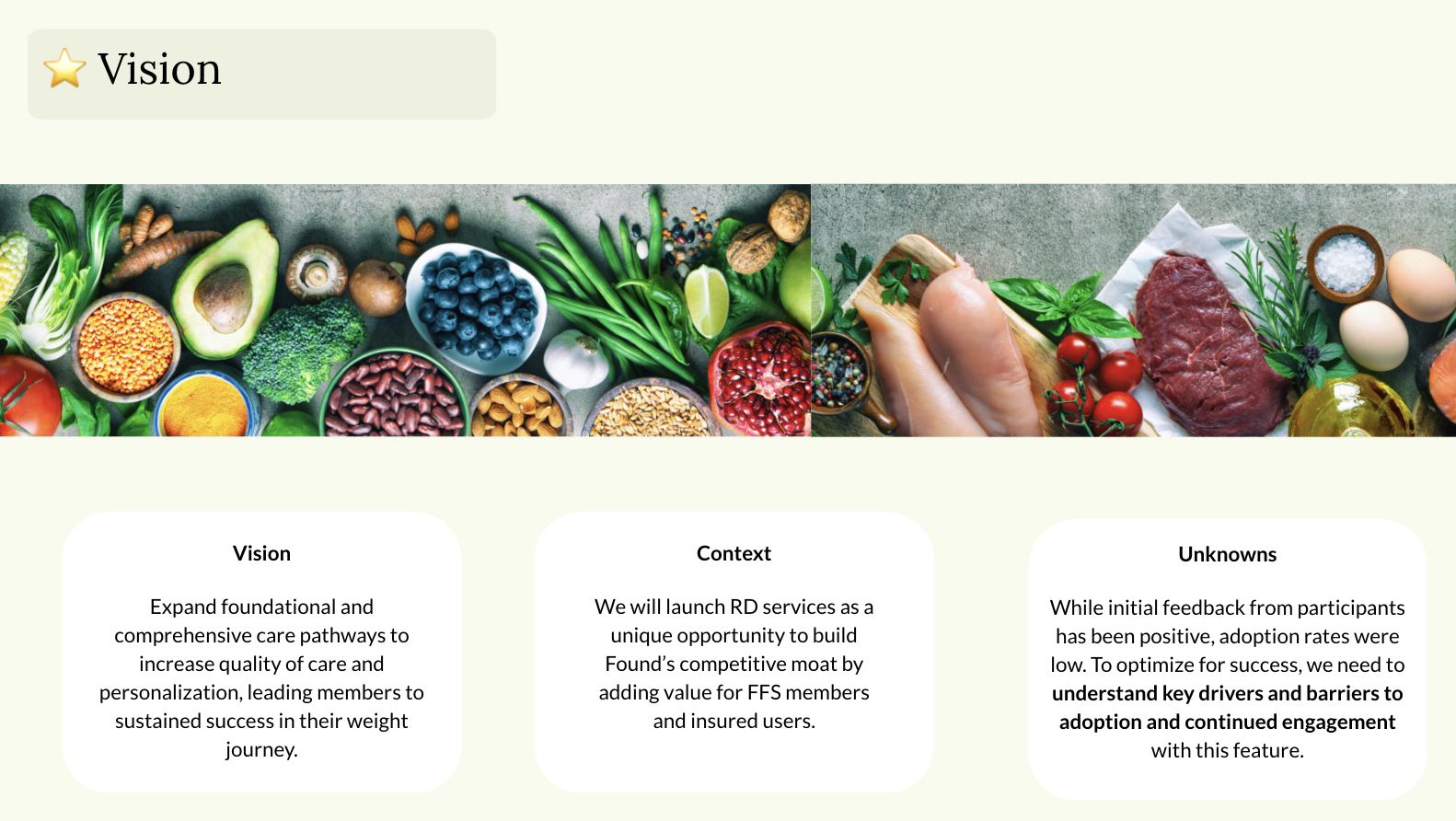
Found piloted a new Registered Dietitian (RD) service to improve user outcomes and retention — but initial engagement was just 4%, with unclear value perception and no clear direction for who it was for or how to position it. I was brought in to answer a critical question: Should we continue investing in this vertical, and if so, what would make it successful?
Turning nutrition counseling into a measurable growth driver.”
I led a two-phase, mixed-method research and strategy initiative that defined the who, what, and how for launching the RD vertical successfully — from segmentation and concept design to pilot validation and business modeling.
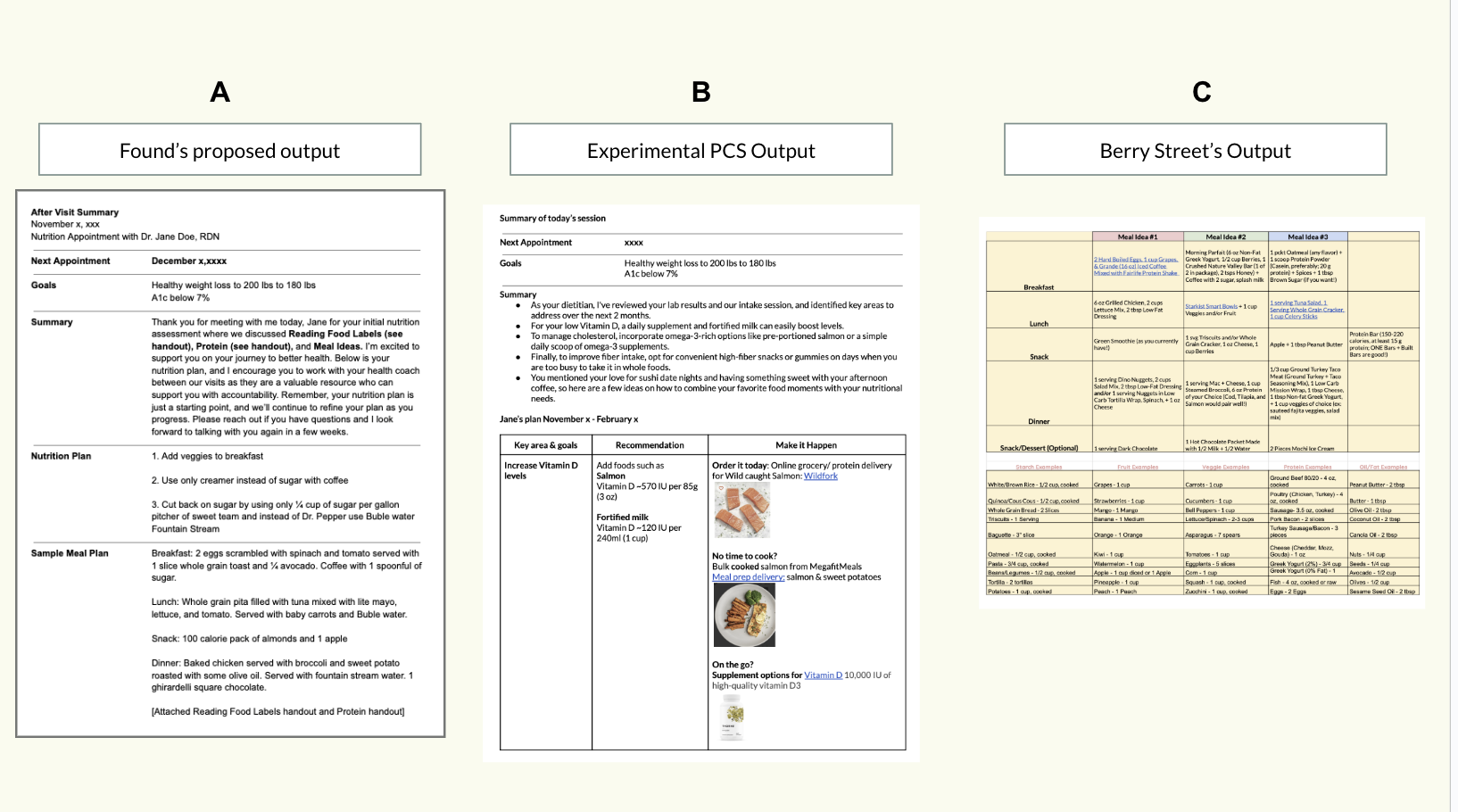
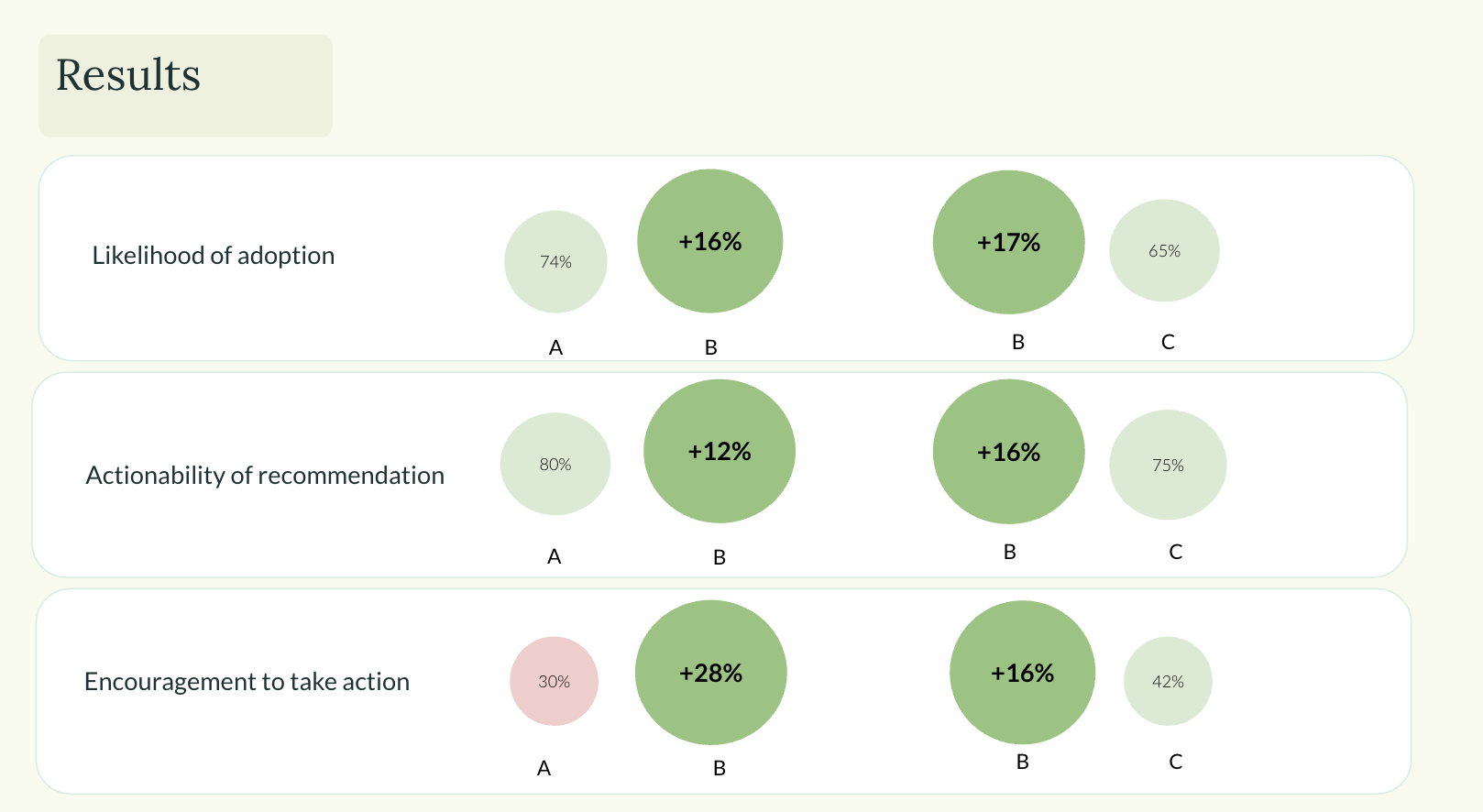
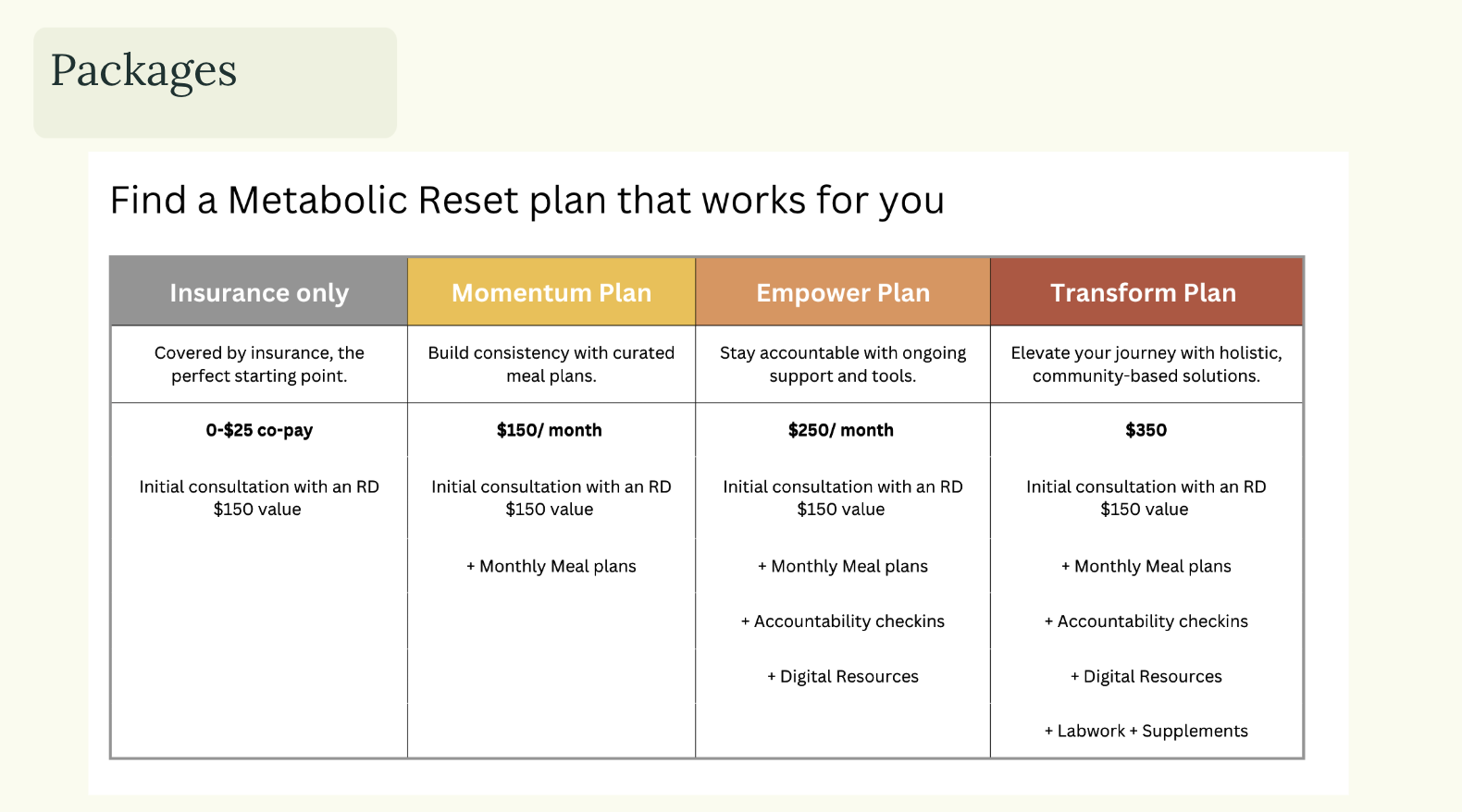
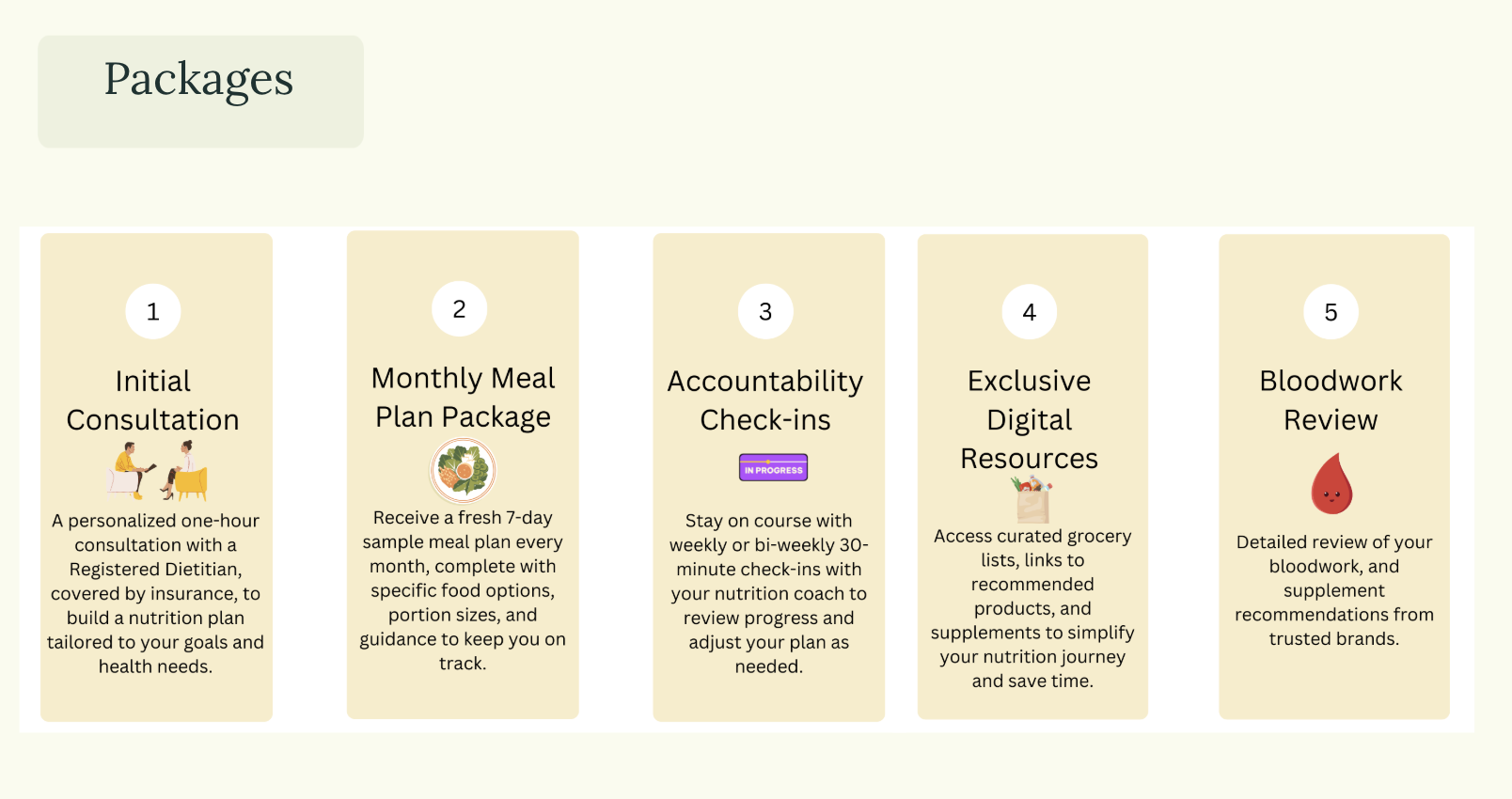
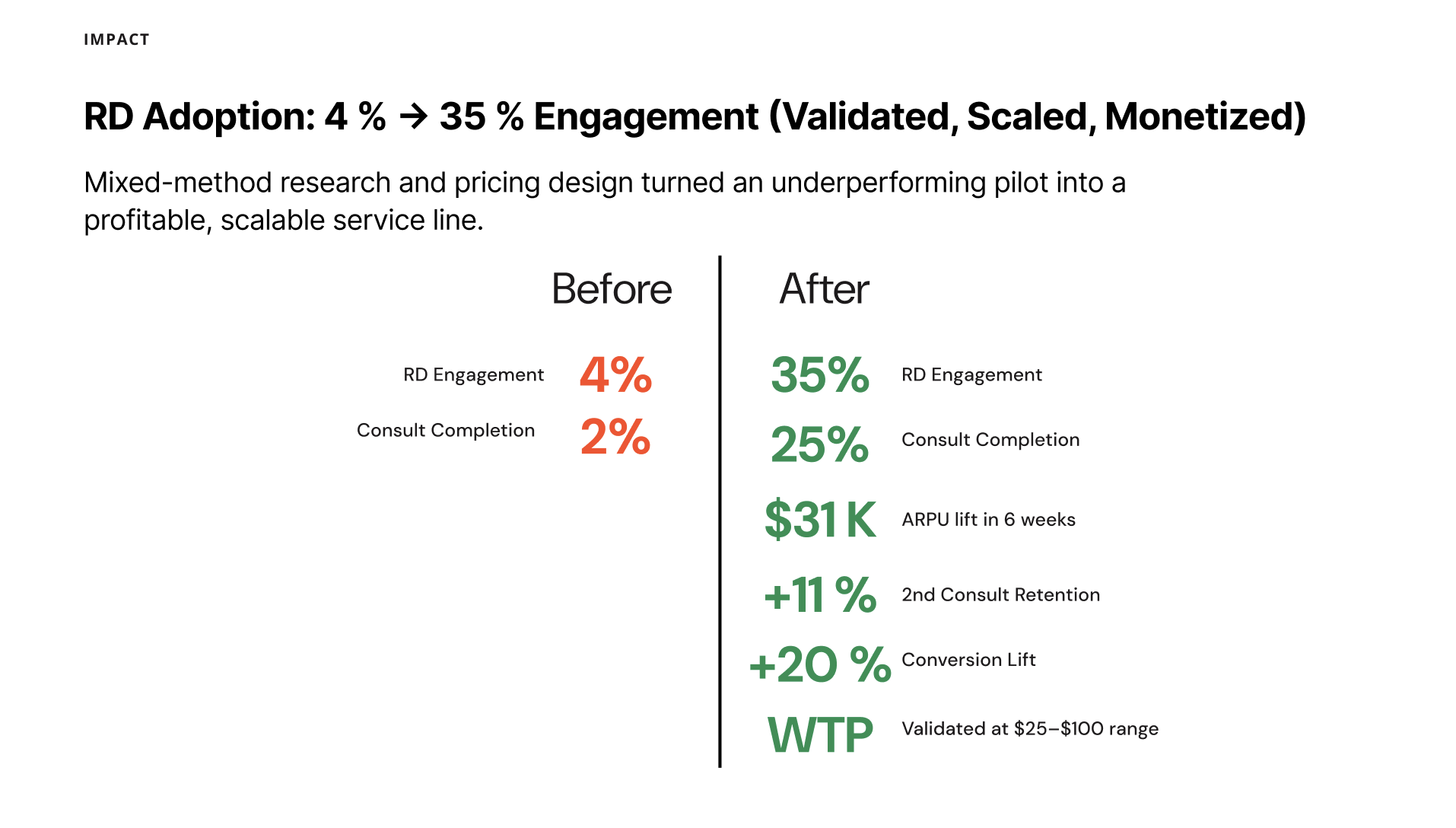
Through this work, we identified the right target audience, redesigned the service model, and launched a low-cost MVP that drove +$31K new revenue, +20% pilot conversion, and +11% retention in just 6 weeks. The approach became the blueprint for how Found now evaluates and launches all new healthcare verticals.
Business Challenge
The initial pilot had low adoption (4% engagement) and poor perceived value.
Leadership needed to decide whether to continue or sunset the RD vertical.
The company lacked clarity on:
Who the service would appeal to,
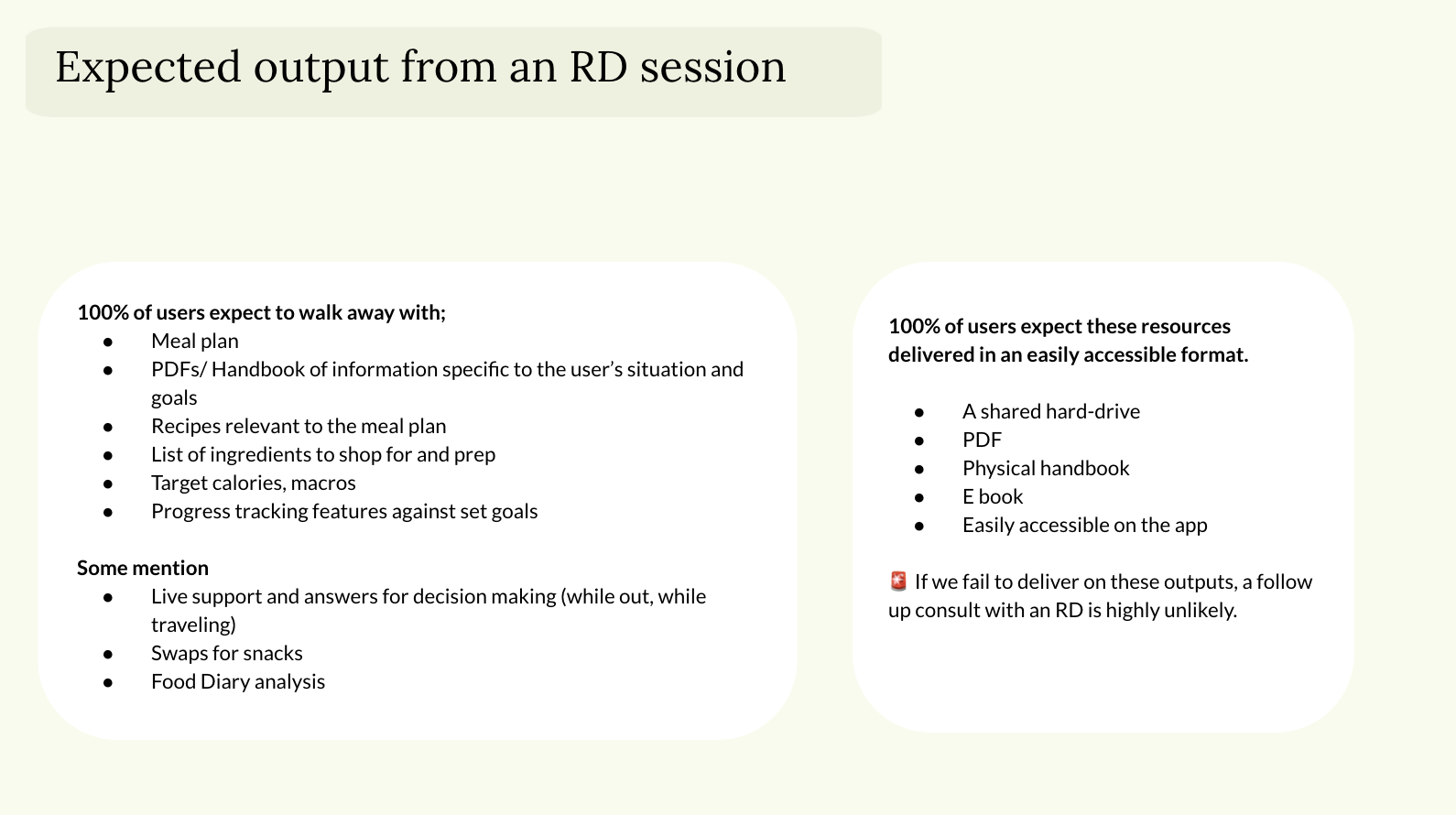
What users expected from RD consults, and
How to deliver and scale it using existing tech and staffing.
There was no established blueprint for launching new service lines in healthcare within tight operational and regulatory constraints.
Approach
Phase 1 — Diagnose & Define
I started by understanding whether RD services were genuinely valuable to our users or just a nice-to-have.
Conducted competitive intelligence on 5 telehealth RD services to benchmark positioning and pricing.
Ran in-depth interviews and a survey to identify motivators, barriers, and desired outcomes.
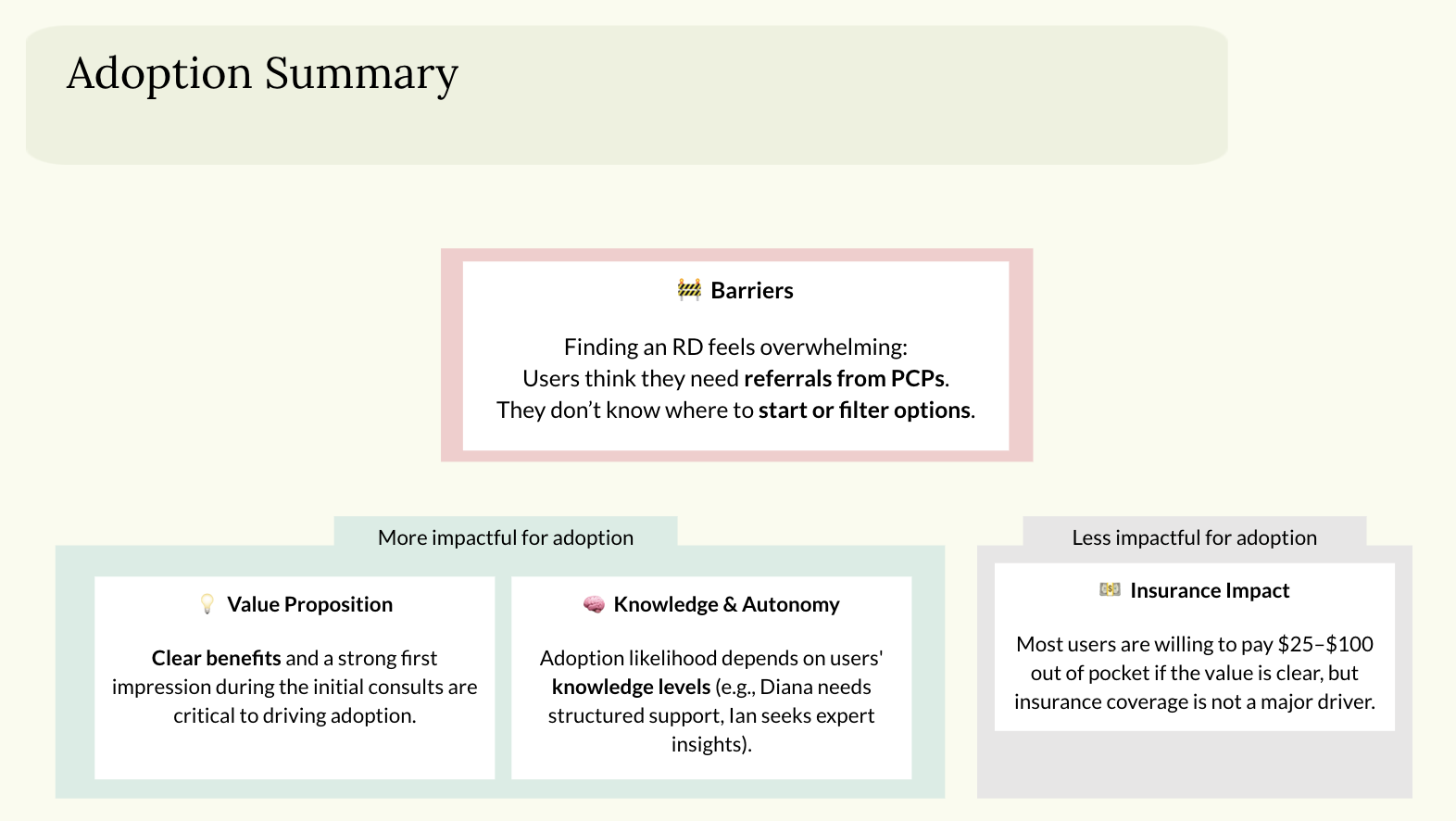
Outcome: Identified top barriers to adoption — confusion around referrals, unclear value, and lack of visible deliverables.
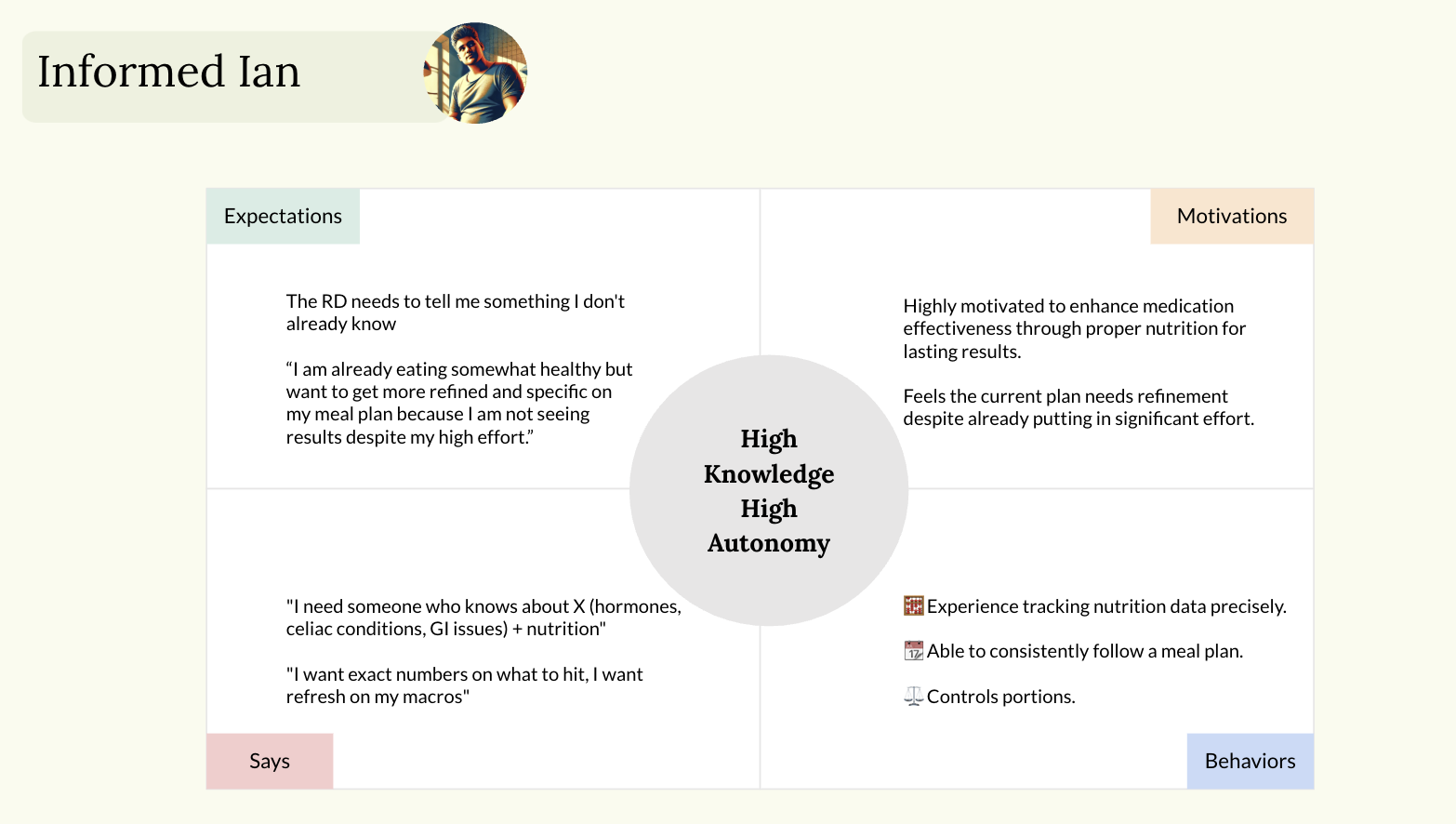
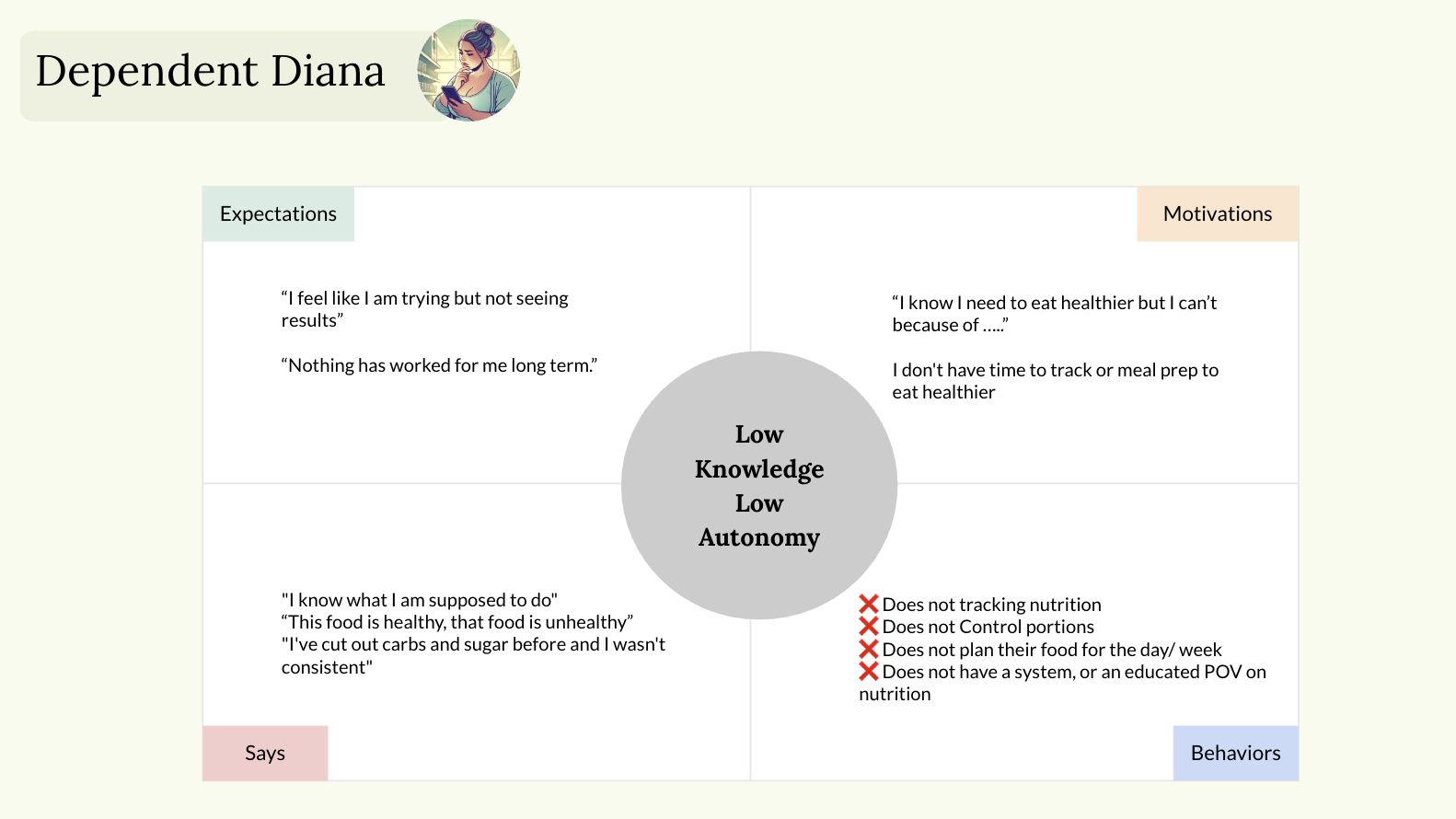
Defined two high-clarity target personas:
Informed Ian (High Knowledge, High Autonomy): needs advanced insights and refinement.
Launched a new healthcare vertical from zero → measurable revenue in under 6 weeks.
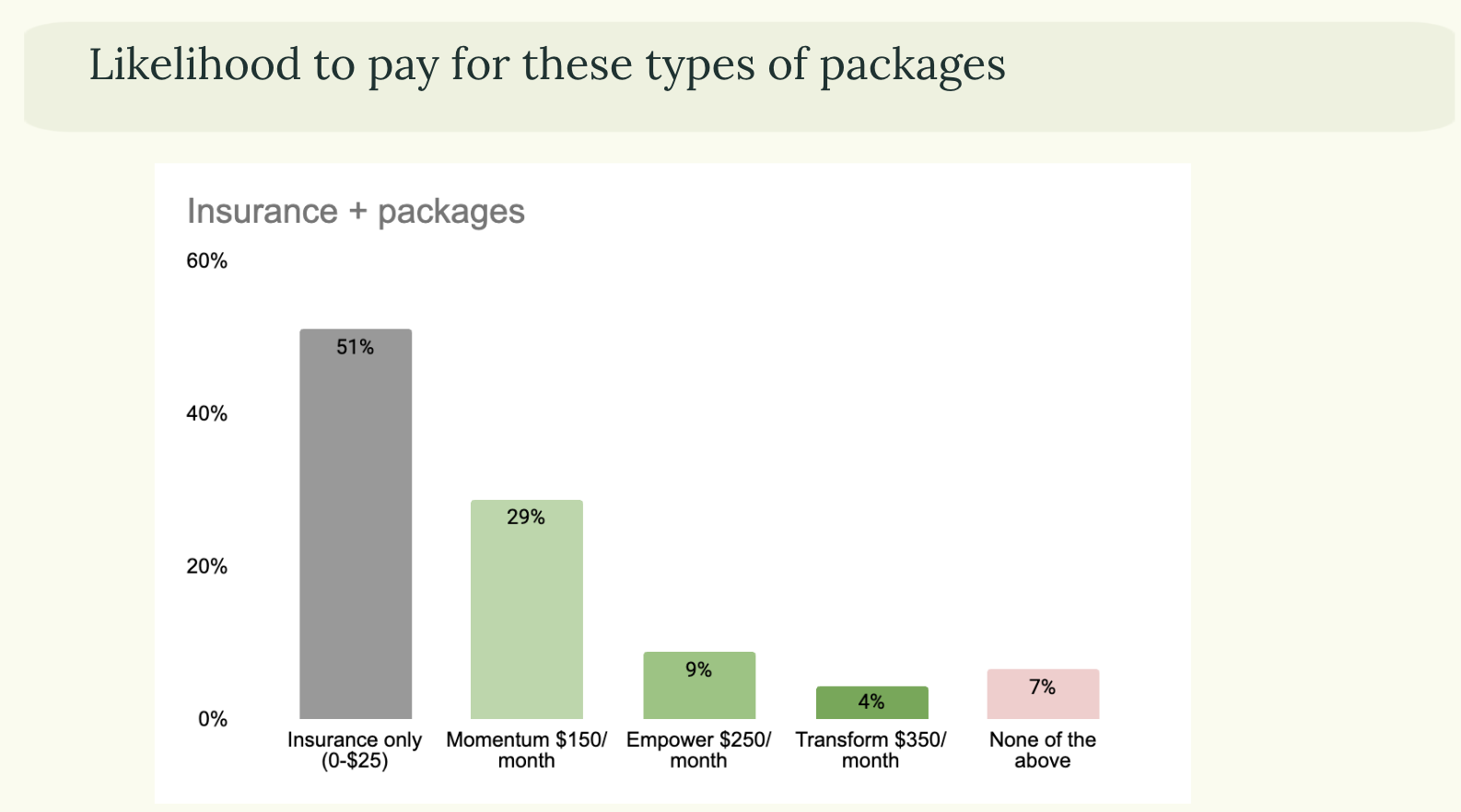
Created a validated business case for expanding the RD program, balancing user value and profitability.
Designed the blueprint now used org-wide for evaluating and launching new service lines.
From unclear pilot → measurable product-market fit.
Leadership & Influence
Principal–Director Level (L8–L9) scope:
End-to-end ownership from ambiguous opportunity → validated business model.
Unified Product, Clinical, Ops, and Marketing around a shared service vision.
Mentored PMs on how to run mixed-method validation under high uncertainty.
Established a 0→1 research-to-revenue playbook reused for multiple vertical launches.
Organizational Impact
This project shifted how Found evaluates innovation — from assumptions to validated prototypes. By proving that a new healthcare service could be conceived, validated, and monetized using existing systems and staff, I helped redefine how the company builds and scales new offerings — fast, lean, and insight-led.